Puerto
|
Introduction:
The Drive/The Town Adventure 1:
Whale
Watching and the Fetid Beaches Adventure 2:
Mangrove
Fun and Isla Magdalena Adventure 3:
Dune Camping and a Friendly Adventure 4:
Snorkeling in the Mangroves |
|
Adventure 2: Mangrove Fun and Isla Magdalena
 in
a
concrete courtyard of the hotel from a modest nook in the corner. The menu in Spanish wasn’t entirely clear, but
we felt bold enough to order avena.
This turned out to be a thin, tasty gruel
with large chunks of cinnamon sticks.
The fresh squeezed orange juice was ecstasy and I indulged in
spicy
Mexican hot chocolate to stave off the morning desert chill.
in
a
concrete courtyard of the hotel from a modest nook in the corner. The menu in Spanish wasn’t entirely clear, but
we felt bold enough to order avena.
This turned out to be a thin, tasty gruel
with large chunks of cinnamon sticks.
The fresh squeezed orange juice was ecstasy and I indulged in
spicy
Mexican hot chocolate to stave off the morning desert chill.Unfortunately, the whole area was covered in a
dense fog
which made navigation on the water difficult.
We delayed the trip to the dock by an hour, then drove down with
Esteban
and ventured out into the bay.
The agenda for this day was whale watching
followed
by kayaking in the mangroves, but Esteban (our captain and guide that
day) thought
it would
be wiser to start with kayaking, given the visibility.
“I can always come back in the dark” he
said—easier from the whale watching grounds than from the mangroves.
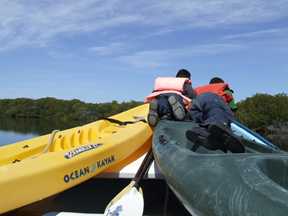
We took with us two boys about 12 years old. Esteban explained that around that age a lot
of kids simply stop going to school; Mag Bay Tours employs a few of
them in an
effort to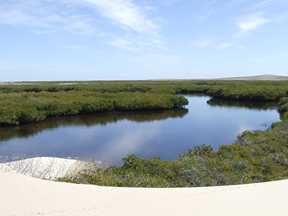 offer them skills and more options. Isac
and Edgar
were adorable, happy to clamber over the two kayaks to the bow of the
boat to
steer us through deep water and around buoys.
On our first attempt we found the channel too foggy and were
forced to turn around. My mother and I sat
on the
pier and ate corn tortillas and strange Mexican cheese while we waited
for more
auspicious
weather. The boys eventually came over
and were asking questions about the situation…alas, it was not the most
productive conversation I had in Spanish as I assumed they knew more
about the
situation than I did and so struggled to interpret their concerns.
offer them skills and more options. Isac
and Edgar
were adorable, happy to clamber over the two kayaks to the bow of the
boat to
steer us through deep water and around buoys.
On our first attempt we found the channel too foggy and were
forced to turn around. My mother and I sat
on the
pier and ate corn tortillas and strange Mexican cheese while we waited
for more
auspicious
weather. The boys eventually came over
and were asking questions about the situation…alas, it was not the most
productive conversation I had in Spanish as I assumed they knew more
about the
situation than I did and so struggled to interpret their concerns.
Eventually Esteban returned and we headed to the
mangroves
under a rapidly clearing sky. We wove
our way through flotillas of plastic buoys and past the commercial
dock, choked
with large fishing vessels and alive with cormorants.
Herons clustered at the edge of the mangroves
as we made our way into the channel, quickly leaving all signs of
humanity
behind. Apparently the mangroves are
rarely visited except periodically by fishermen who string gillnets
across the
channels and come away with most of the resident fish.
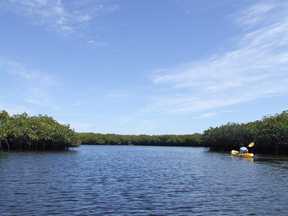
The water reminded me of the sloughs back
home, amber and calm, weaving in wide arcs but lined with the strange
probing roots
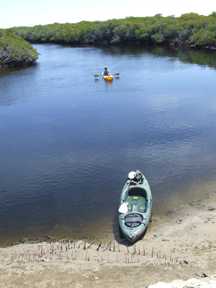
of the mangroves. After about 15 minutes
we reached the end of the 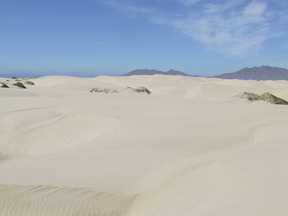 channel
and brought the boat onto a stretch
of sand
100 feet long at the edge of the dunes.
We took a quick look around for coyotes, then
decided to trek across
the dunes to
the Pacific side before kayaking.
channel
and brought the boat onto a stretch
of sand
100 feet long at the edge of the dunes.
We took a quick look around for coyotes, then
decided to trek across
the dunes to
the Pacific side before kayaking.
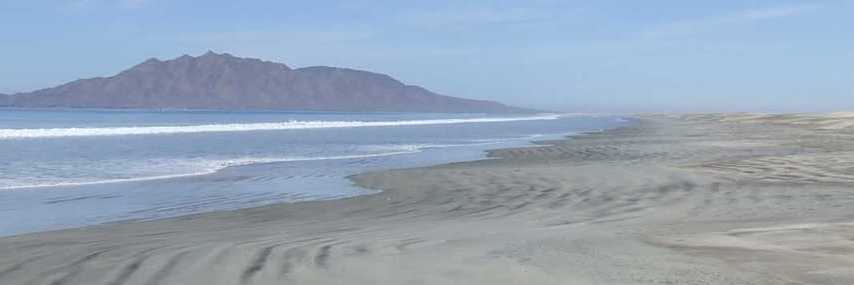
The land there turned out to be a narrow isthmus
connecting
two
mountainous sections of Isla Magdalena (the southernmore
section forms
one edge of the mouth of the bay). It
was about 200 yards wide and covered in flawless white sand dunes, some
crowned
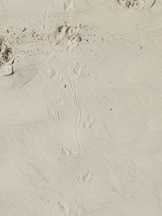
with blooming succulents. Mouse, lizard,
beetle, and coyote tracks (see photos of the former three below)
populated the sand everywhere and the whole
area was
stunning. Rippled white dunes right out of
the 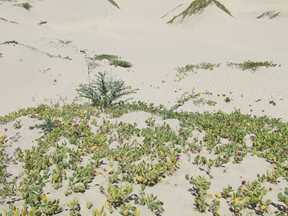 between them;
there
was no sign of humanity. Esteban said
that few people make their way out there, and even he hadn’t been there
in a
couple of years. Eventually we dropped
out
onto the wide flat wet sand and the rolling surf of the Pacific. Esteban pointed out a computer monitor
sticking out and explained that a container had fallen off
a barge
nearby some years ago; we came across dozens of monitors in various
states of
decay all over the beach. Also
shells. Sand dollars, clams, scallops,
and elegant snail shells lay on the sand in dizzying numbers…I’m not
exactly a sea
shell
fanatic, but it was too good to resist and I filled my pockets with the
finest
specimens. Esteban pointed out enormous
scallop shells that looked like mussels and were up to two feet
long—too
delicate and huge to bring back. These
along with the smaller scallops I saw piled on the beach near town are
harvested by divers in the bay.
between them;
there
was no sign of humanity. Esteban said
that few people make their way out there, and even he hadn’t been there
in a
couple of years. Eventually we dropped
out
onto the wide flat wet sand and the rolling surf of the Pacific. Esteban pointed out a computer monitor
sticking out and explained that a container had fallen off
a barge
nearby some years ago; we came across dozens of monitors in various
states of
decay all over the beach. Also
shells. Sand dollars, clams, scallops,
and elegant snail shells lay on the sand in dizzying numbers…I’m not
exactly a sea
shell
fanatic, but it was too good to resist and I filled my pockets with the
finest
specimens. Esteban pointed out enormous
scallop shells that looked like mussels and were up to two feet
long—too
delicate and huge to bring back. These
along with the smaller scallops I saw piled on the beach near town are
harvested by divers in the bay.
We played on the sand and enjoyed the view for a
few minutes
before trekking our way back to the mangroves under the hot sun. The boys offloaded the kayaks and then took
off with Esteban in the panga, leaving us to glide our way silently
back with
the outgoing tide. It was lovely. Sheltered from the wind, the mangroves were
quiet and relatively still and we made our way slowly through them,
exploring
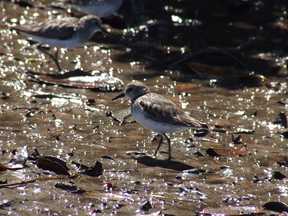
little bays and watching birds. We snuck
up on a flock of sandpipers, saw numerous yellowlegs, and diving grebes
with
bright red eyes. Despite ample sunblock,
my arms were bright red in half an hour.
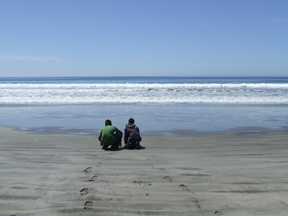
The water seeping into the sit-on-top kayaks (the same type I
have at
the homestead) forced us to sit in puddles of water
and 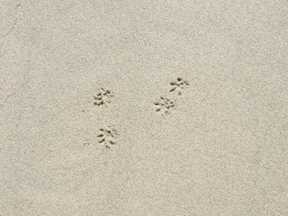

 and
that
cooled us
a
little. About half way back to the bay I spotted an
osprey flying straight up the channel about 20 feet up.
Just as he approached the bow of my boat he
turned and flew off over the mangroves, a striped fish clutched in his
talons,
facing the same direction he was flying—a classic osprey moment!! Although I think I could have taken a
stunning photo, I deliberately opted to enjoy the image with no
distraction.
and
that
cooled us
a
little. About half way back to the bay I spotted an
osprey flying straight up the channel about 20 feet up.
Just as he approached the bow of my boat he
turned and flew off over the mangroves, a striped fish clutched in his
talons,
facing the same direction he was flying—a classic osprey moment!! Although I think I could have taken a
stunning photo, I deliberately opted to enjoy the image with no
distraction.

 hunt
on the
sandbars
before heading back to the dock.
hunt
on the
sandbars
before heading back to the dock.
So
the mangroves and the sand dunes completely won
us over. Esteban, evidently surprised and
pleased by
our appreciation, mentioned the possibility of camping out
there. With no more activities scheduled
for the week, we took him up on the offer and arranged to return the
next day.
But
our adventures that day weren’t over. We
still had a whale watching trip to make
good on. After dropping the kayaks off
at the muelle we headed out into the bay and I managed to change pants
in the
bottom of the boat while underway (an awkward endeavor).
Being late in the afternoon the wind had come up and we hugged
the
shoreline of Isla Magdalena instead of cutting straight across to the
mouth. We passed along the edge of more
stunning
beaches and sand dunes on the isthmus before turning south along the
edge of
the mountainous region. We soon came in
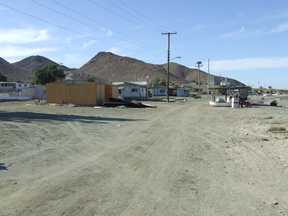
site of Puerto Isla Magdalena, a fishing village of about 400 people,
and
decided to make a stop. We pulled on to
the gravel beach among all the fishing pangas and jumped out. The tidiness and cleanliness of the village
was in stark contrast to 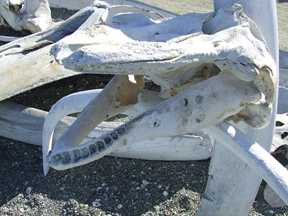 whale bones over the years and put them
together
in an engaging display. The jaws of a
blue whale encircled a gray whale skull, a humpback whale skull, some
ribs, and
the skull of an undetermined toothed whale. The
owner swore up and down it was the
whale bones over the years and put them
together
in an engaging display. The jaws of a
blue whale encircled a gray whale skull, a humpback whale skull, some
ribs, and
the skull of an undetermined toothed whale. The
owner swore up and down it was the 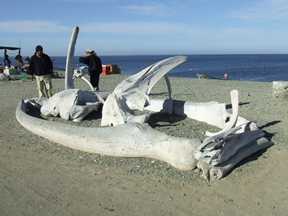
 skull
of a baby humpback, but I
rather
think those were tooth holes lining the jaws (see photos).
It had a short beak, so I was thinking orca
or pilot whale perhaps. An interpretive
sign nearby identified the local mice as the endemic “spiny pocket
mouse.”
skull
of a baby humpback, but I
rather
think those were tooth holes lining the jaws (see photos).
It had a short beak, so I was thinking orca
or pilot whale perhaps. An interpretive
sign nearby identified the local mice as the endemic “spiny pocket
mouse.”
We soon continued our way along the coast, gazing
up at the
scrub desert vegetation covering the reddish mountainsides. We passed the foundation of an unfinished
fish processing plant abandoned in an economic downturn and now
occupied by a
few fishermen. Eventually we reached the
mouth of the bay and the end of Isla Magdalena, spotting half a dozen
whale blows around us. But the wind was
kicking up a bit, the whales didn’t appear friendly, and when Esteban
pointed
out a few fishing huts on the beach and talked warmly of a hike to the
top of
the ridge behind them we took him up on that instead.
After
riding the swells onto the gravel beach,
Esteban left
Isac and Edgar in charge of the panga and we wandered past the lobsters
shells in
the high
tide line and the half
dozen
huts and scattered lobster pots of the little enclave before starting
up the hill behind. Coming from a lush
rainforest
where going off trail means scrabbling over fallen trees and hacking
your way through
devil’s club, walking in the scrub desert is heavenly!
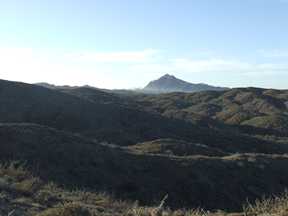
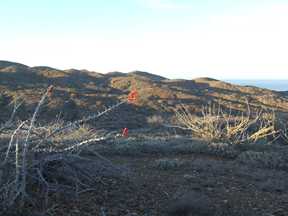
We wound our way between ocotillo trees,
clumps of grass, and small cacti, following ridge lines and making our
way
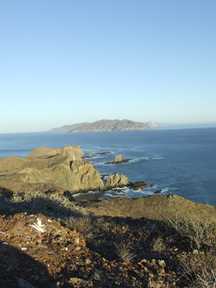
higher and higher until we reached the top of the highest mountain
overlooking
a precipitous drop to the Pacific side.
A gang of sea lions played in the surf crashing over the reefs
below and
pairs of whales facing north blew in the open ocean—heading back to
between ocotillo trees,
clumps of grass, and small cacti, following ridge lines and making our
way
higher and higher until we reached the top of the highest mountain
overlooking
a precipitous drop to the Pacific side.
A gang of sea lions played in the surf crashing over the reefs
below and
pairs of whales facing north blew in the open ocean—heading back to
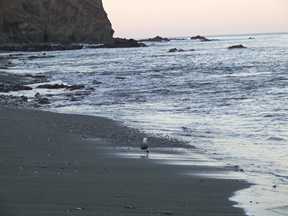
Esteban left us up there and trekked back to the boat alone. We reluctantly followed a few minutes later to find that the panga was high and dry on the gravel. A mounting southerly swell had washed it up the beach and I admit I had my doubts about getting it off again! But, the swells kept coming and Esteban and the boys were able to take advantage of a big one to push it out into deep water. In the meantime, my mother and I admired the subtle gray feathers and bright red bill of a Heermann’s gull (see photo below). By then the light was fading and we faced a long ride home so forewent any whale watching for the day. Half way back we lost daylight altogether and my mother and I shivered as the Milky Way came out. Esteban made good on his comment about returning in the dark, following the lighted channel markers back to the dock.
 watch
followed by camping on the dunes. Since
Esteban was busy, we were forced to
find our way back to the hotel without a guide, my mother and I
flailing in the
dark and quickly becoming lost.
Identical dusty streets seemed to reach in every direction,
poorly lit,
with no indication of where “downtown” might be located.
I was beginning to get a little unnerved (and
cranky) when my mother happened to notice the back side of a playground
and we
realized we were driving parallel and one block over from the main
drag—and had
no idea! We gratefully made our way home
and, thoroughly exhausted, decided to have a picnic dinner in our room. Our hotel had a cooler of beer and a
selection of wines downstairs so we bought a bottle of red wine for 100
pesos,
had the receptionist open it for us, and locked ourselves in our room. We feasted on cold refried beans, Mexican
cheese, cold corn tortillas, and red wine; it was fabulous.
watch
followed by camping on the dunes. Since
Esteban was busy, we were forced to
find our way back to the hotel without a guide, my mother and I
flailing in the
dark and quickly becoming lost.
Identical dusty streets seemed to reach in every direction,
poorly lit,
with no indication of where “downtown” might be located.
I was beginning to get a little unnerved (and
cranky) when my mother happened to notice the back side of a playground
and we
realized we were driving parallel and one block over from the main
drag—and had
no idea! We gratefully made our way home
and, thoroughly exhausted, decided to have a picnic dinner in our room. Our hotel had a cooler of beer and a
selection of wines downstairs so we bought a bottle of red wine for 100
pesos,
had the receptionist open it for us, and locked ourselves in our room. We feasted on cold refried beans, Mexican
cheese, cold corn tortillas, and red wine; it was fabulous.