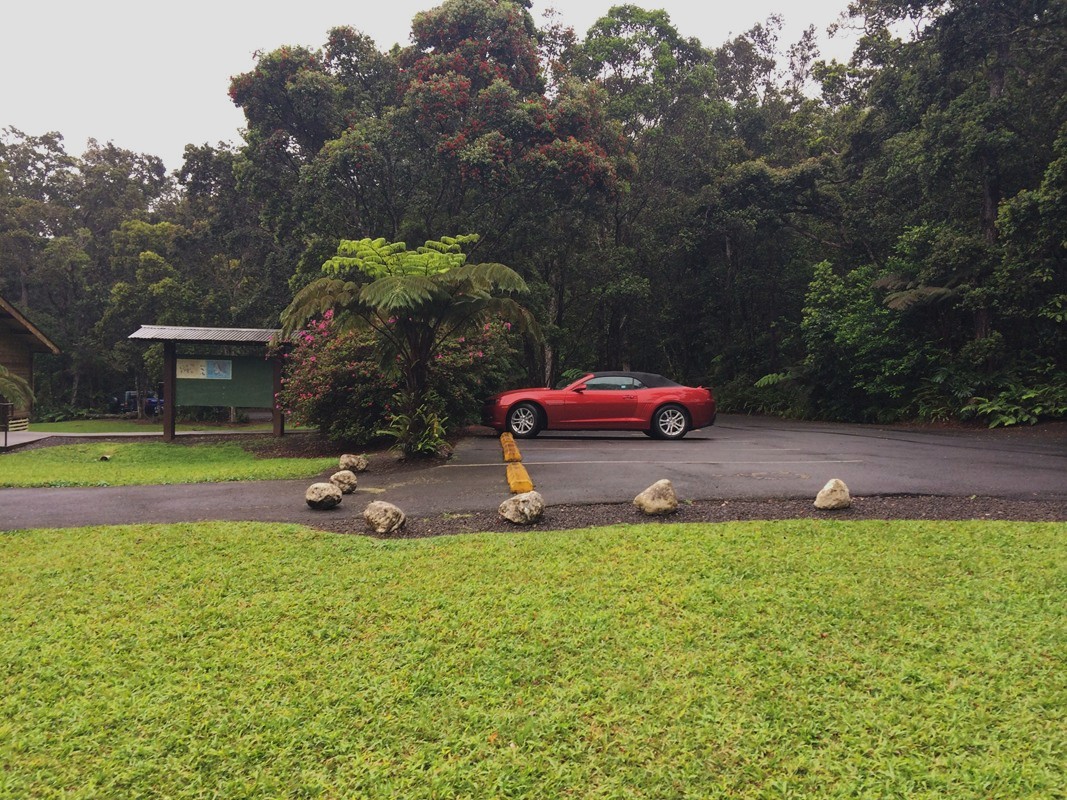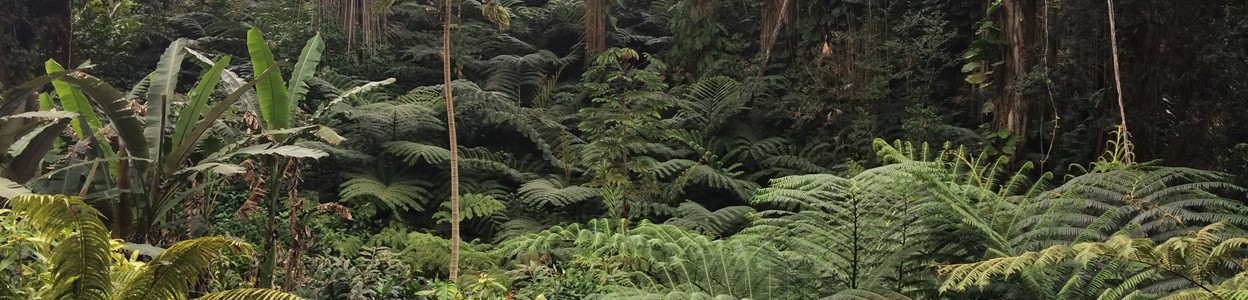
The jungle around Akaka Falls
Hawaii
(The Big Island): March 6-16
Day 8, Driving the Island
The jungle around Akaka Falls
I’d planned to go horseback riding Friday morning,
having
been awed by the immense pasture land during our drive home from
Pololu, but it
had been canceled the day before when the other riders canceled for an
illness.
So with the day free and after two early mornings, Chris and I spent a
leisurely morning enjoying the lanai. Having no other plans, we decided
it
would be a good day to explore more of the island and visit the east
side. Late
in the morning we took off, with me in the driver’s seat, and soon left
Highway
11 for 180, which veers off along the mountainside to meet the saddle
road
before continuing to Waimea. It turned out to be a beautiful drive,
much more
scenic and interesting than Highway 19 that it doesn’t quite parallel
at sea
level. The saddle road was practically brand new, a smooth, clean
highway all
the way across. I think we passed a wild boar road kill (at least it
looked
more like a boar than any domestic animal around) which I would have
stopped or
turned around for if I hadn’t been going quite so fast.
The road steadily gained elevation until the
vegetation
became sparse and we passed between Mauna Loa and Mauna Kea. There was
little
to break up the scrubby, scarce vegetation except for a small military
base.
The descent on the other side was fast and it was fun watching the
vegetation
change so dramatically. The road narrowed as it passed through the lush
jungle
outside Hilo and, before I knew it, I was in Hilo itself and had no
idea where
to go. I went through some very normal looking residential areas on a
final
descent to the ocean, then took a right where I should have taken a
left and
drove by a promising looking restaurant on the edge of a pond.
Famished, we
pulled over at a small waterfront park to turn around, but not before
wandering
around. Located on one side of the bay, we could look across at the
other end
of Hilo and what appeared to be single large hotel. Grass grew to the
edge of a
shoreline of 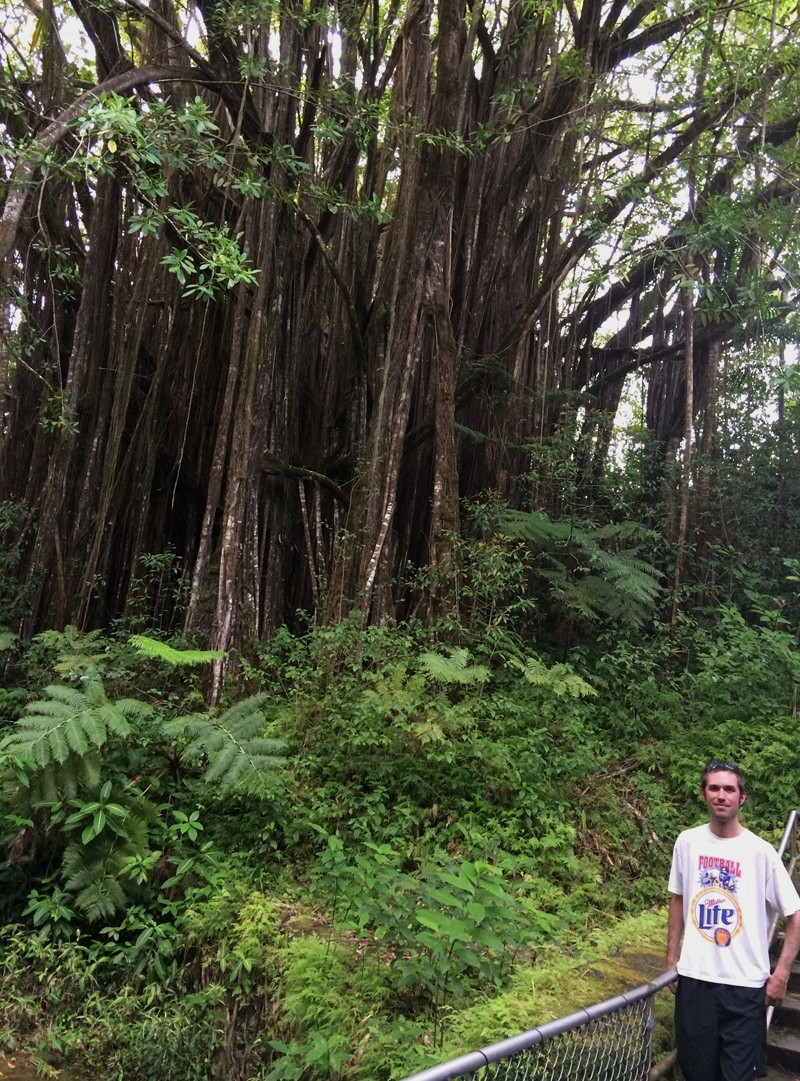 rock broken by many small fingery channels through
which
the water
coursing in and out was mesmerizing. An enormous banyan tree grew
nearby. That
part of the park was narrow, but lovely. However, we soon retreated
down the
road to the Ponds Hilo restaurant for boat drinks and lunch. I had the
best
vegetarian reuben sandwich I’ve ever been served.
rock broken by many small fingery channels through
which
the water
coursing in and out was mesmerizing. An enormous banyan tree grew
nearby. That
part of the park was narrow, but lovely. However, we soon retreated
down the
road to the Ponds Hilo restaurant for boat drinks and lunch. I had the
best
vegetarian reuben sandwich I’ve ever been served.
From there we drove north following Highway 19
along the
coast. We soon began driving through steep sided gorges tangled up with
dense,
misty vegetation—miniature versions of Pololu, each of them more
dramatic than
the next. Our first stop was Akaka Falls, located in one of these wild
gorges
but some drive inland from the coast. We parked on the road outside the
park
(reducing our fee from $5 to $1 each) and saw a glimpse of the falls
over the
jungle before we descended the foot path from the parking lot. The
trail is a
loop, and we opted for the longer route, taking a right as the path
sloped down
to the bottom of a little gully. A pretty, clear creek flowed over
glossy rocks
in the shade of what is probably the biggest tree I’ve ever seen.
Banyan trees sprout
mini banyans all over themselves, which root and grow together in a
massive
tree system, the trunks of which you can sometimes walk through. As we
climbed
up the other side of the gully, we had a nice view of a slightly less
spectacular waterfall before turning left and climbing a ridge toward
Akaka
Falls. The sides of the path were ridiculous with growth, a dense maze
of roots
and ferns and bromeliads and any number of unknown plants. Within this
enclosure, a bird taunted me mercilessly with its distinctive calls,
sometimes
sounding only a few feet away in the impenetrable vegetation. I
memorized the
call in the hopes of looking it up later, or asking someone, but I
couldn’t
find bird songs on the only bird app I have that covers Hawai’i, and I
never found
a naturalist. So, that bird remains a mystery, but whatever it was, it
was very
abundant in that valley!
A few minutes’ walk up the ridge and the view
broke out over
Akaka Falls and its gorge. Just as impressive as the waterfall was a
huge tree
growing from far below that stretched above our heads over the side of
the
valley, its limbs housing flowering vines (the picture really doesn’t
do it
justice). As we walked the last stretch of path back to the parking
lot, it
started to sprinkle. We had a good look at a mongoose crossing the path
and
making its way up the little creek, and the mystery bird continued to
taunt me.
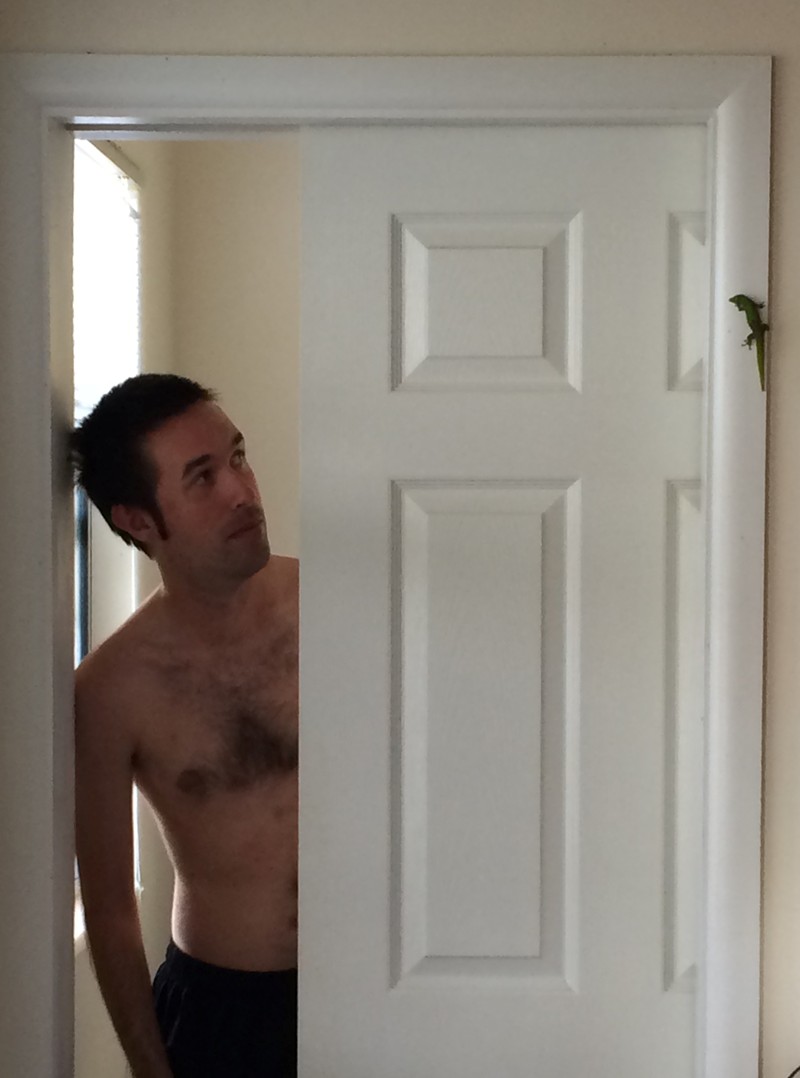 Chris and a gecko |
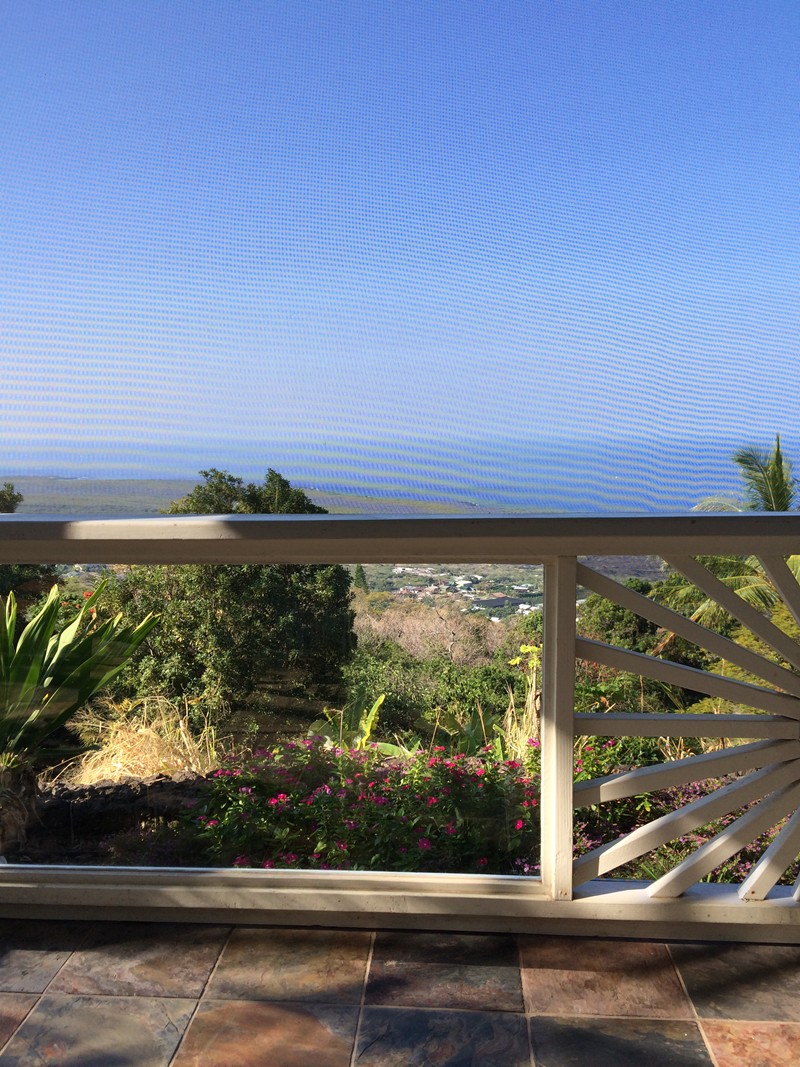 View off our lanai |
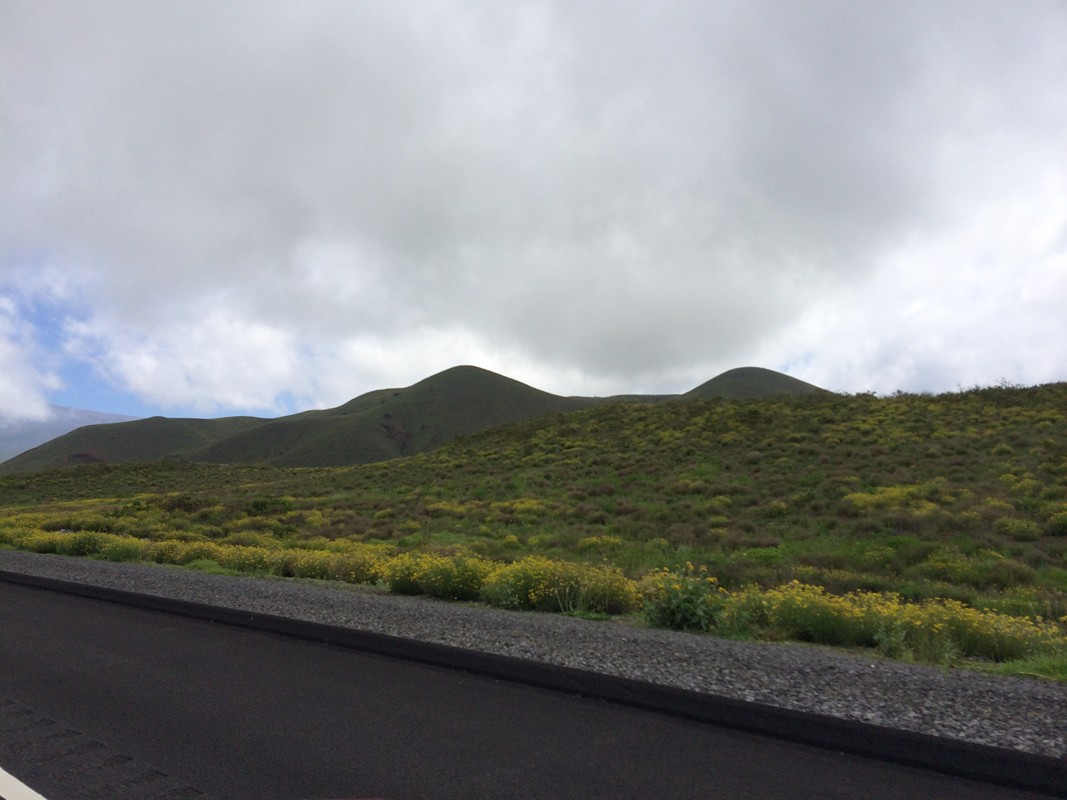 Driving Highway 11 |
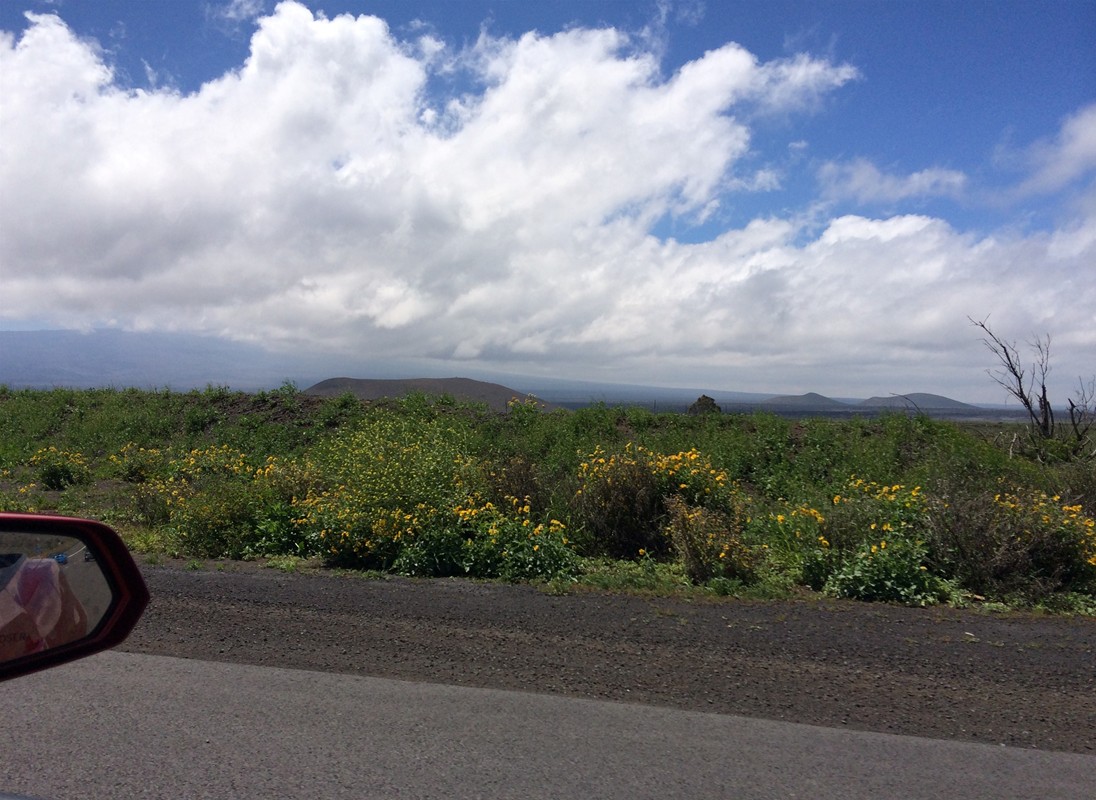 Highway 180 (the saddle road) |
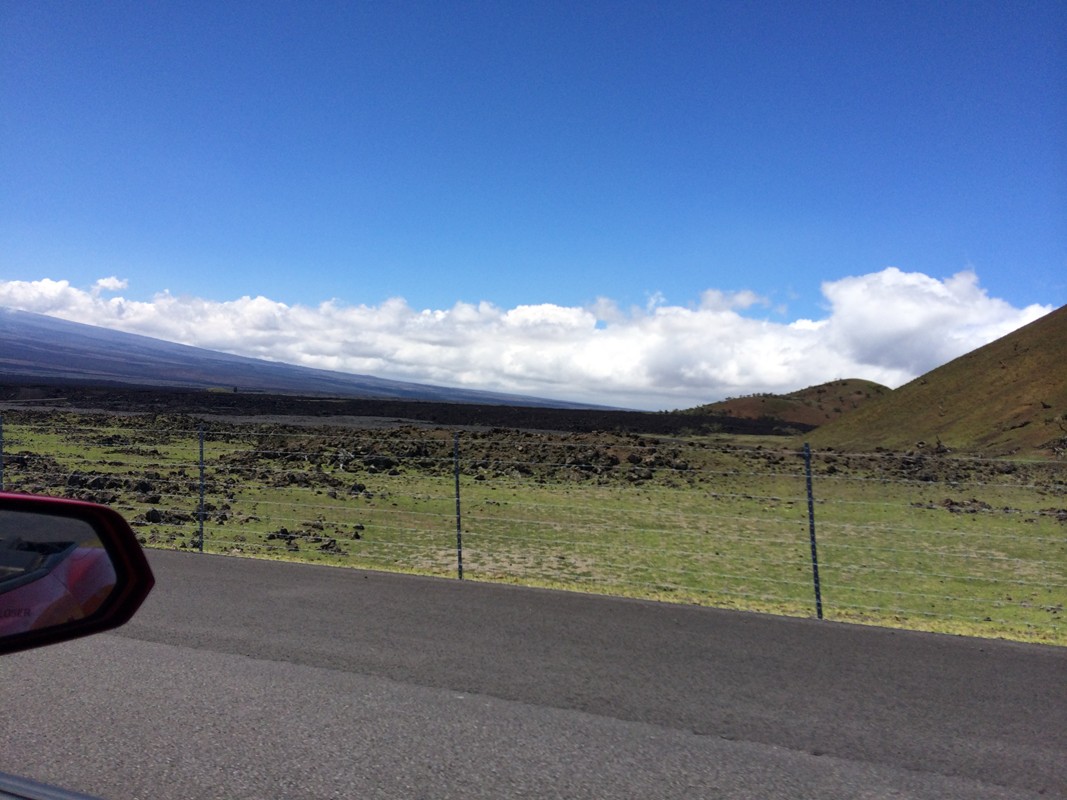 Highway 180 near the saddle |
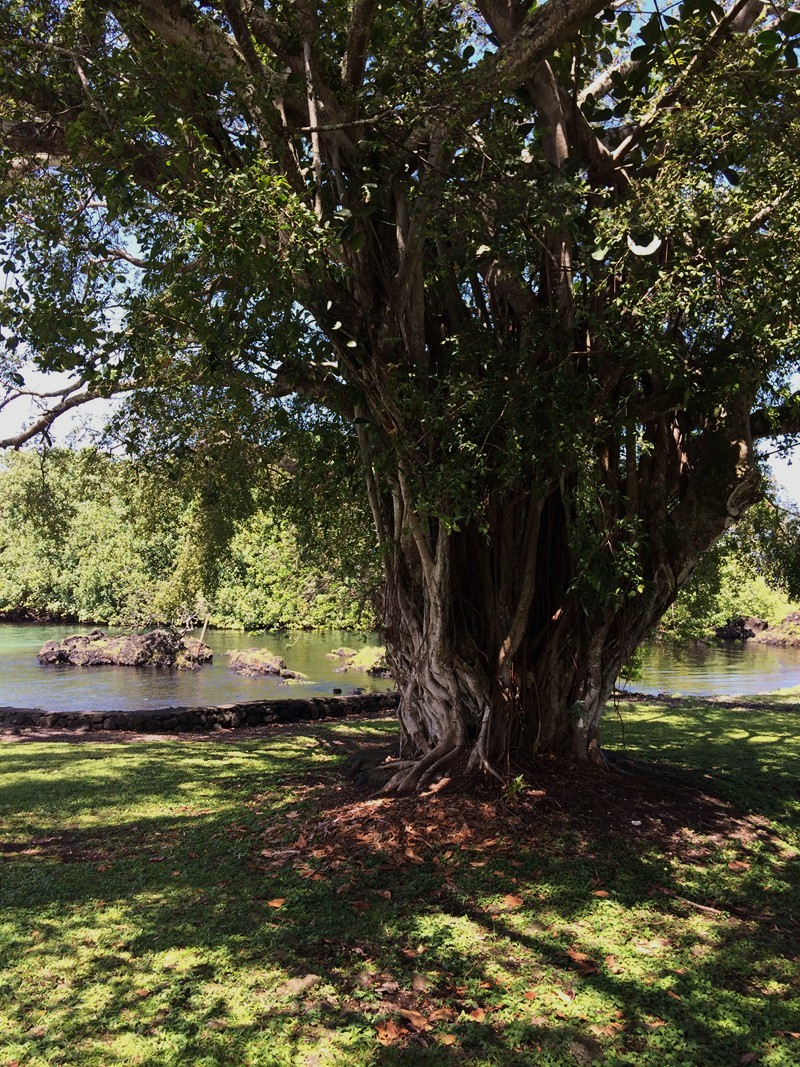 Park in Hilo |
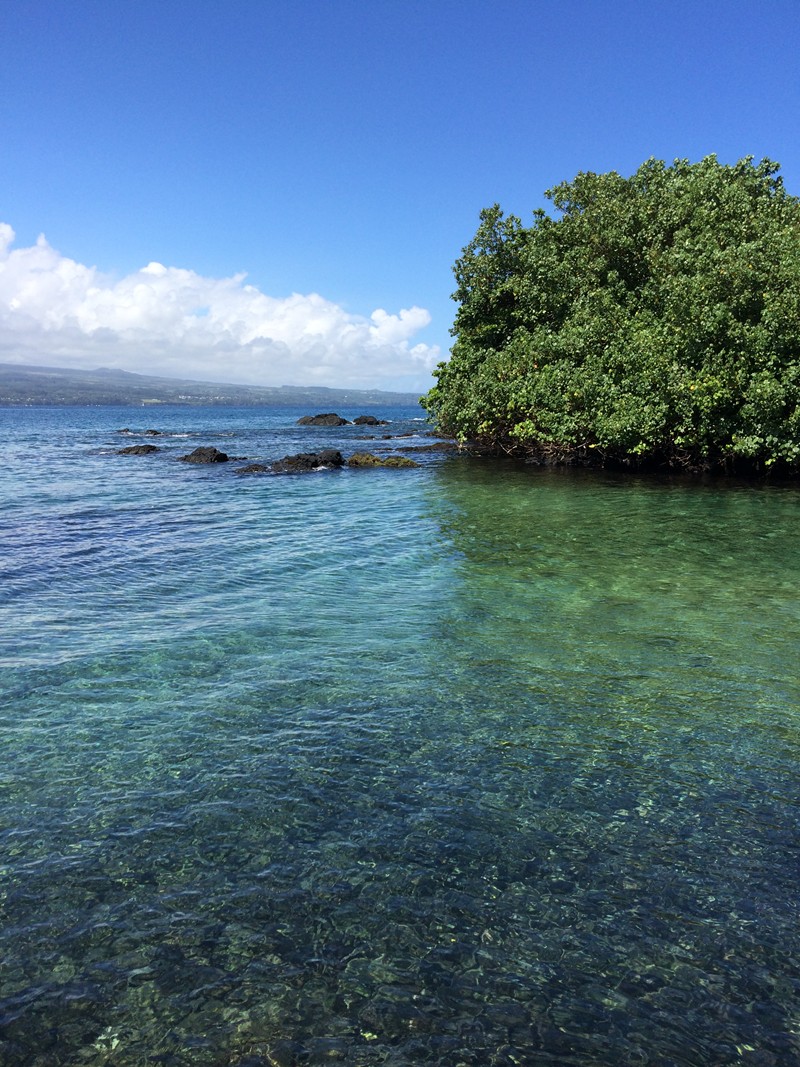 Park in Hilo |
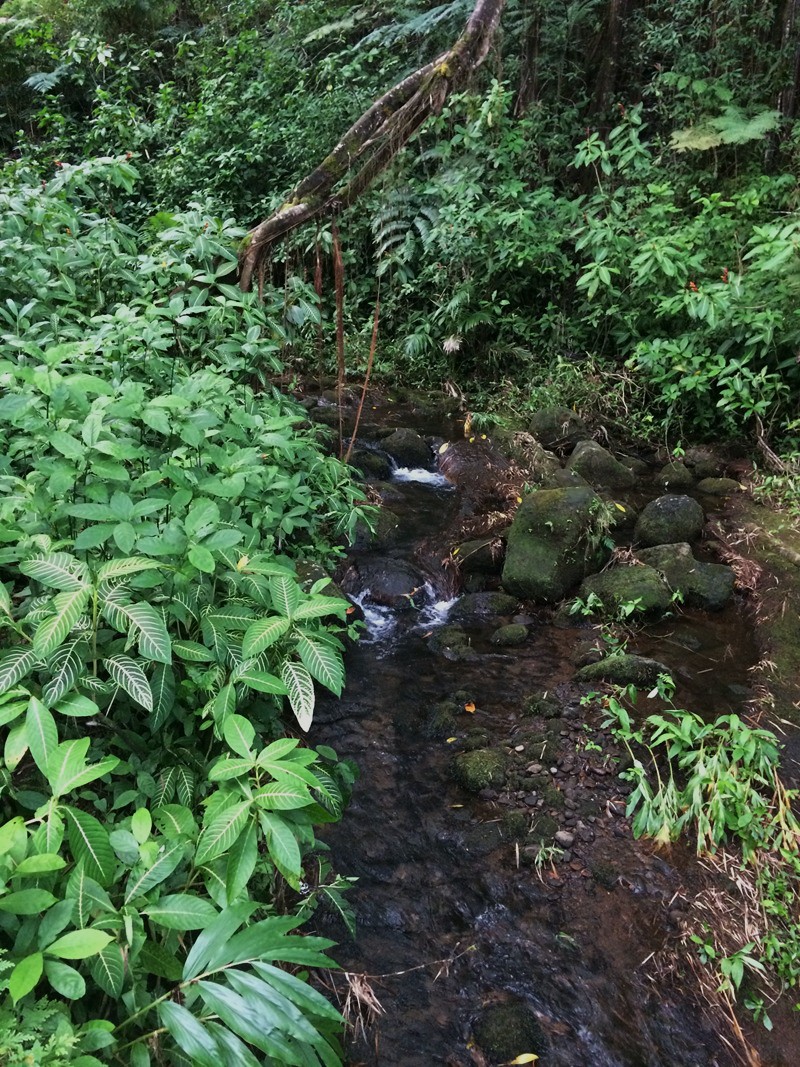 Creek near Akaka Falls |
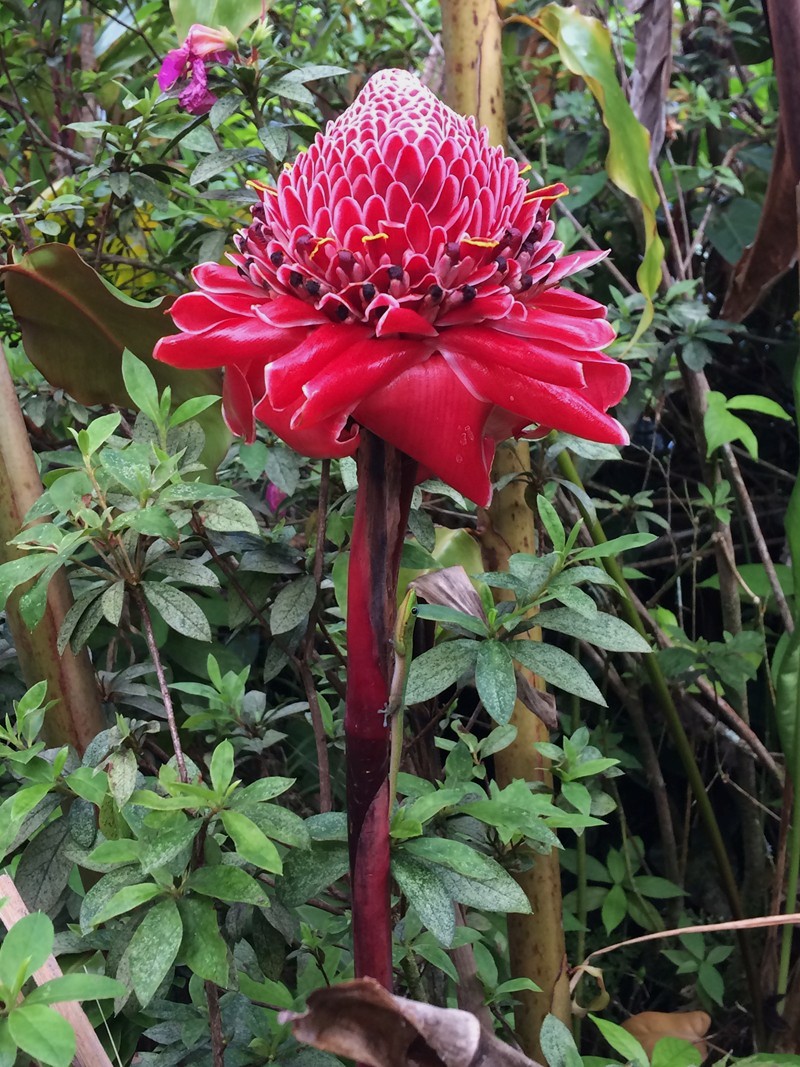 Gecko on a flower |
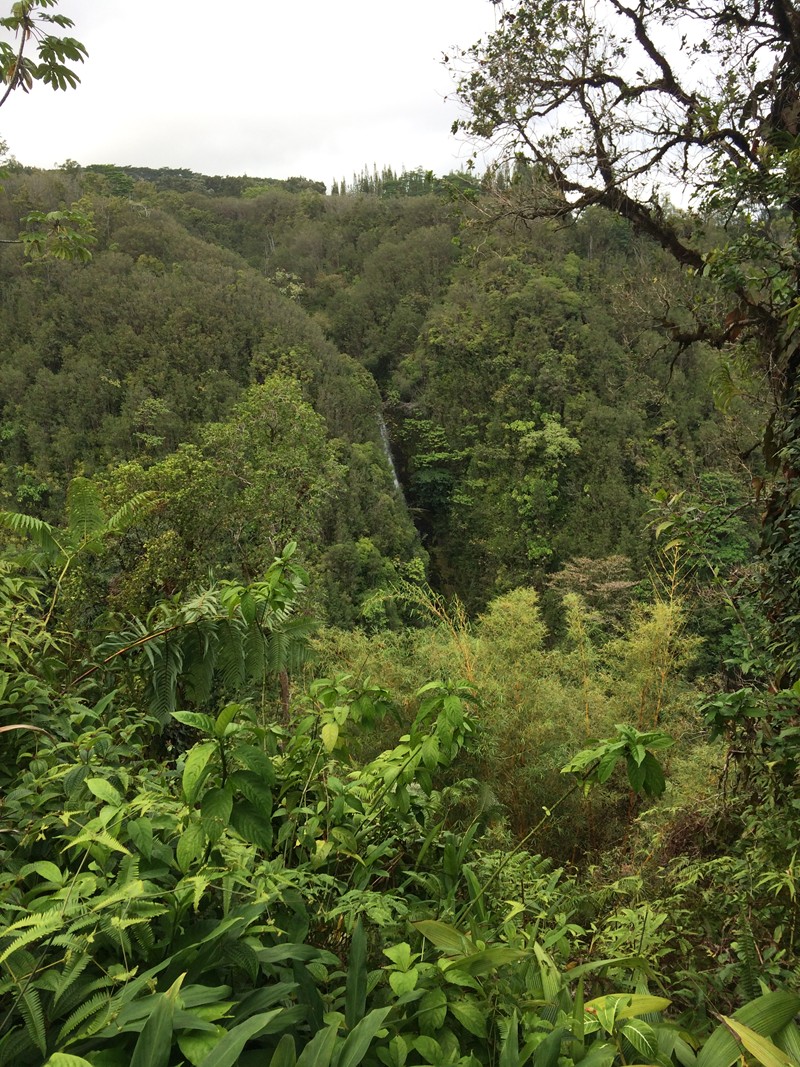 A waterfall |
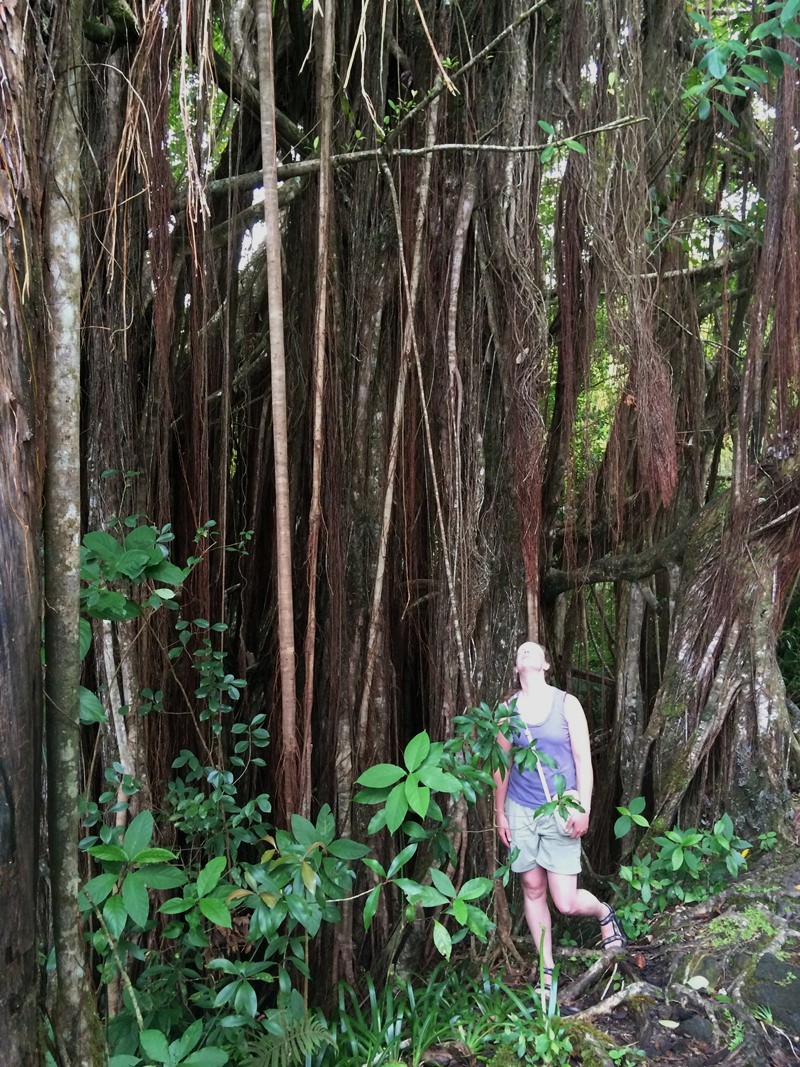 Me and a banyan tree |
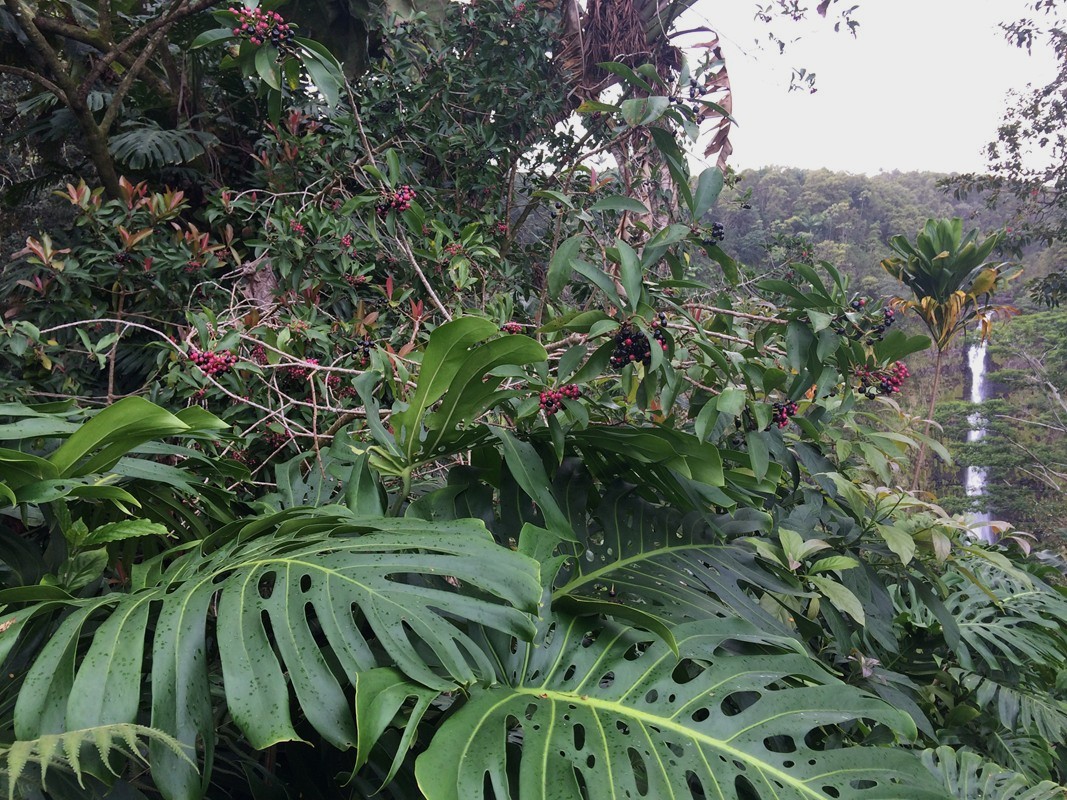 I'm sure all this lushness is invasive |
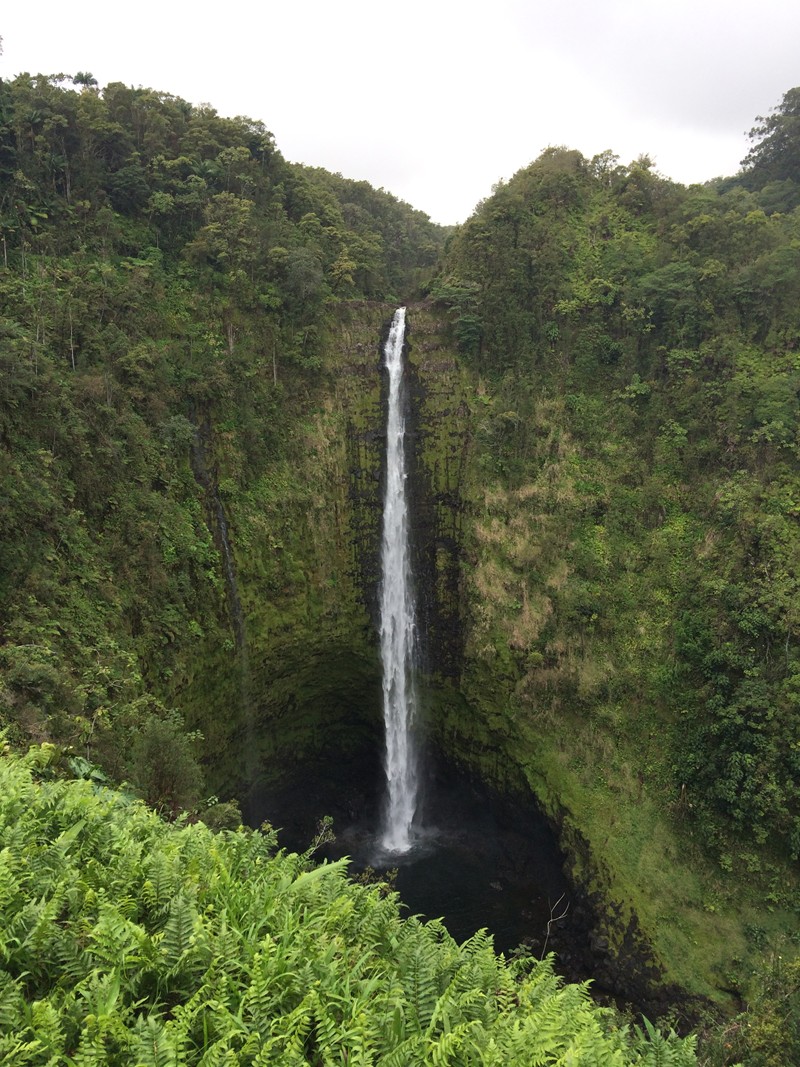 Akaka Falls |
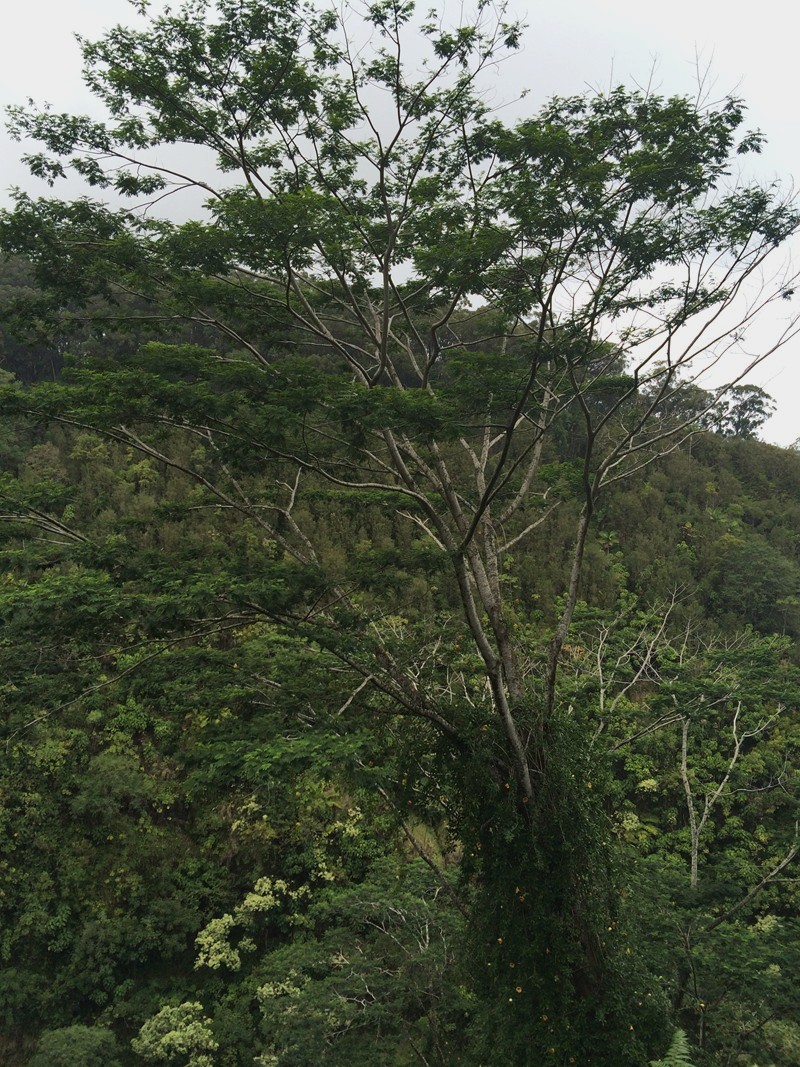 A tall tree full of vines |
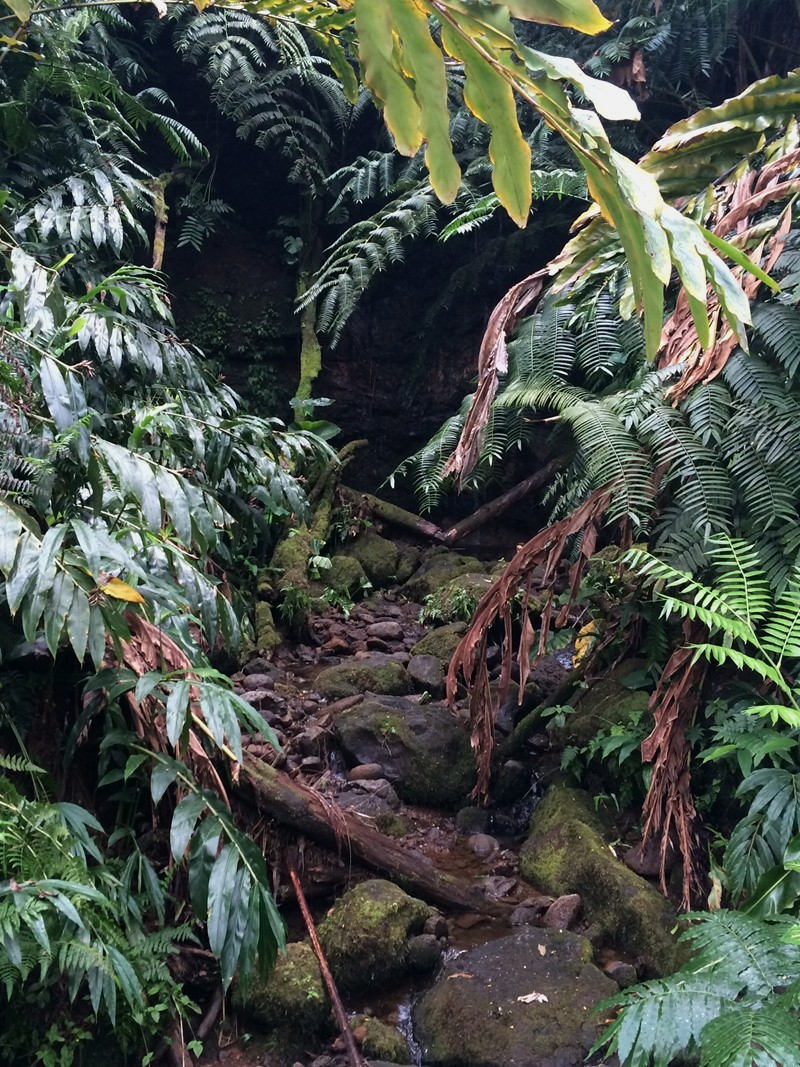 I promise there is a mongoos in there somewhere |
I have to confess that, in terms of interest and
beauty, the
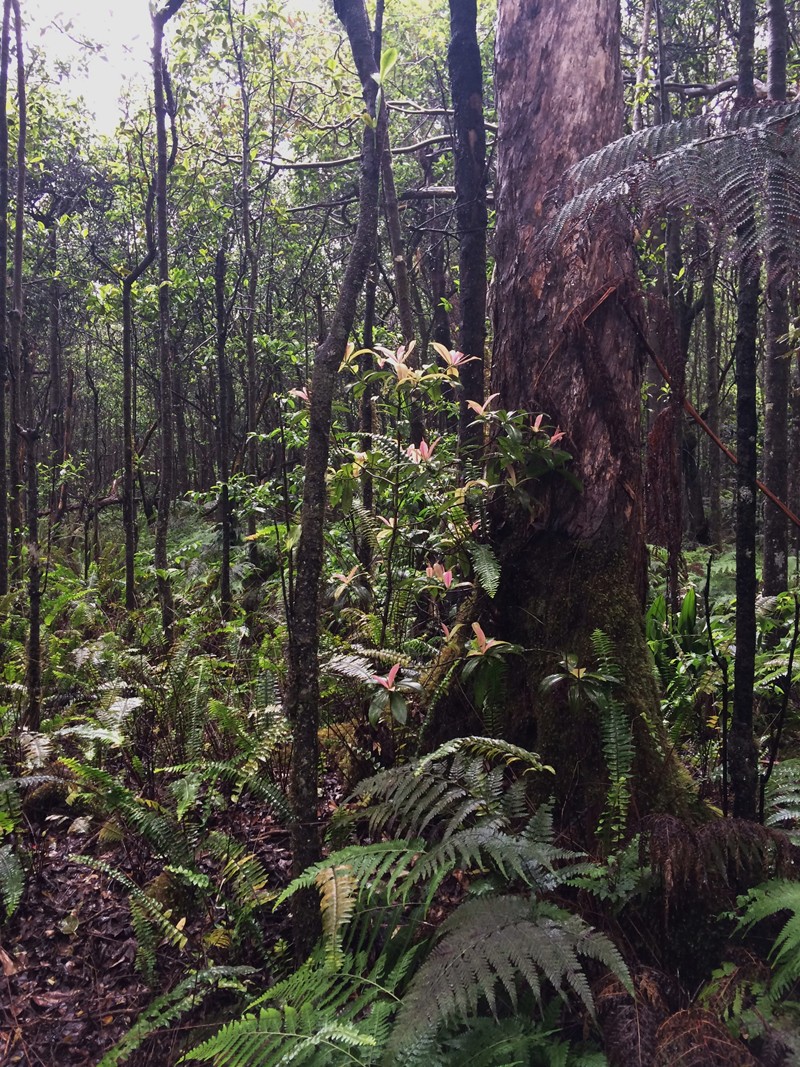
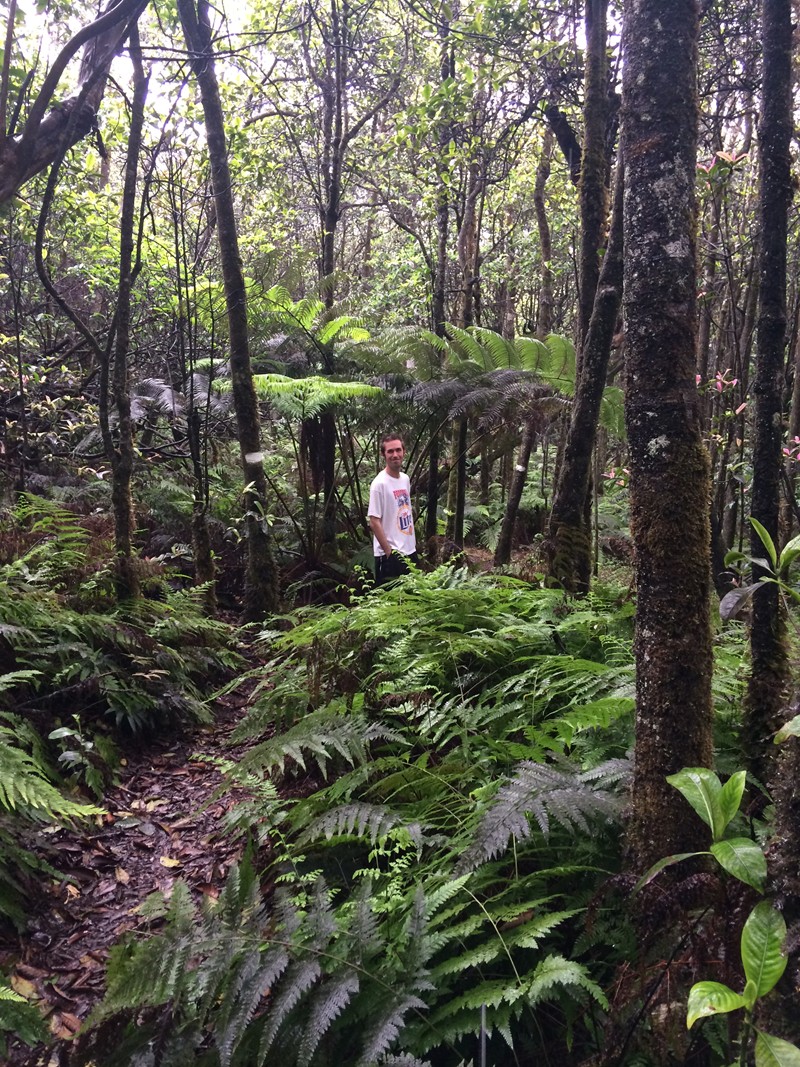
native forest didn’t compare to the riot of jungle at Akaka. Was this
just a
different environment, or was much of Akaka’s plant life in fact
exotic? It
didn’t help that the sky was dumping rain on us the entire time! The
guide was
quite detailed, with a few paragraphs on several dozen stops that I
didn’t
absorb much of. I would have benefited from a better understanding of
local
trees; as it was, we didn’t have enough time allotted to stand in the
rain and
puzzle out each stop, so I picked up what I could. Whoever wrote that
detailed
booklet, though, was right up my alley. Sadly, in the decades since it
was originally
written, invasive plants have significantly gained a foothold in the
forest.
At one point we approached the edge of the forest
and
stepped out into devastation. The adjoining land had apparently been
logged and
the result was sickening. We’d seen a photo at the kiosk of the forest
earlier
when the land around it had first been cleared. It was a lonely
rectangle of
green in swath of destruction in the interest of sugar cane fields.
Those
pretty farms we’d driven through then took on a more sinister face.
We’d driven
past other forests that day that I suspected were second growth at the
time based
on the way the identical trees were growing close together with very
little
undergrowth; more of what appeared to be second growth trees were on
the other
side of this area, perhaps also slated for (at least) a second cut.
Discouraged, we returned to the wet jungle and more birds that never
showed
themselves, and finished the loop. I did catch glimpses of one flock of
birds,
but it was hopeless to find any others in the foliage without a great
deal more
time and patience. We had the trail to ourselves the entire time, which
was a
pleasure. The information I’d found online suggested that this forest
was a
good place for solitude, and they weren’t wrong.
Thoroughly wet and a little muddy, we drove down
off the
mountainside and back to the highway to curve west, though Waimea, and
down
Highway 180 back to Kailua. Chris drove this portion and I napped a
little. We
stopped by the grocery store where Chris picked up a chicken for dinner
and
another bottle of wine.
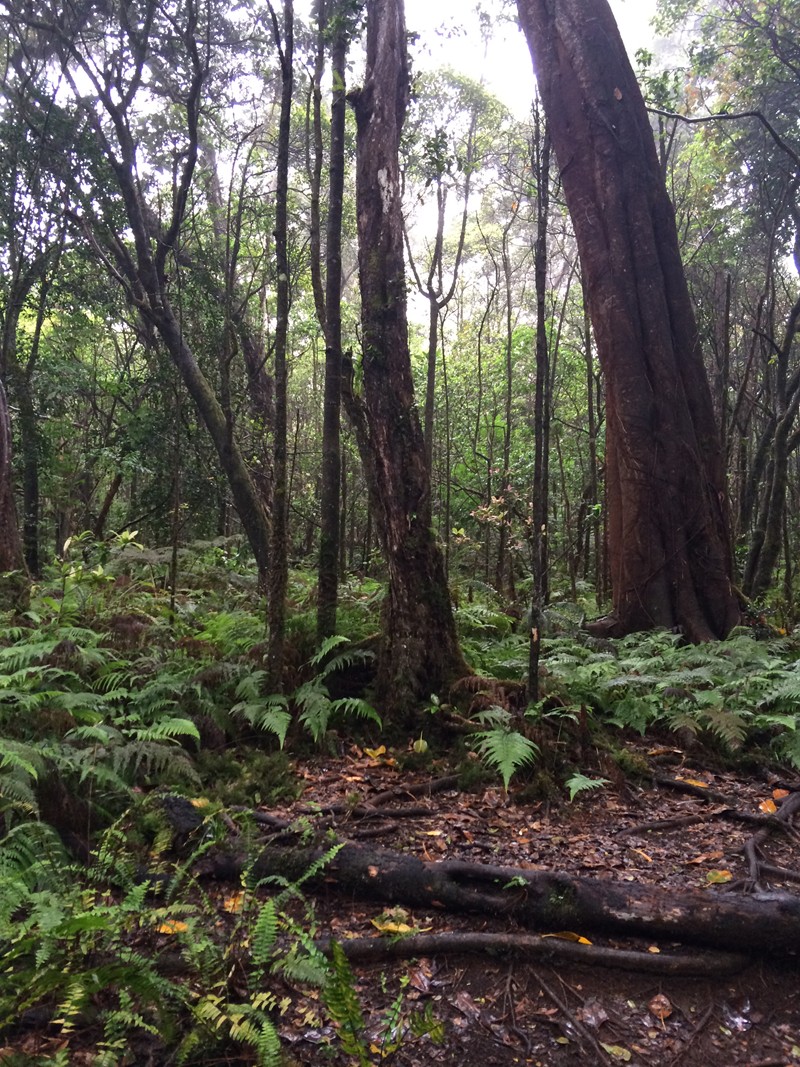 Napolo Forest |
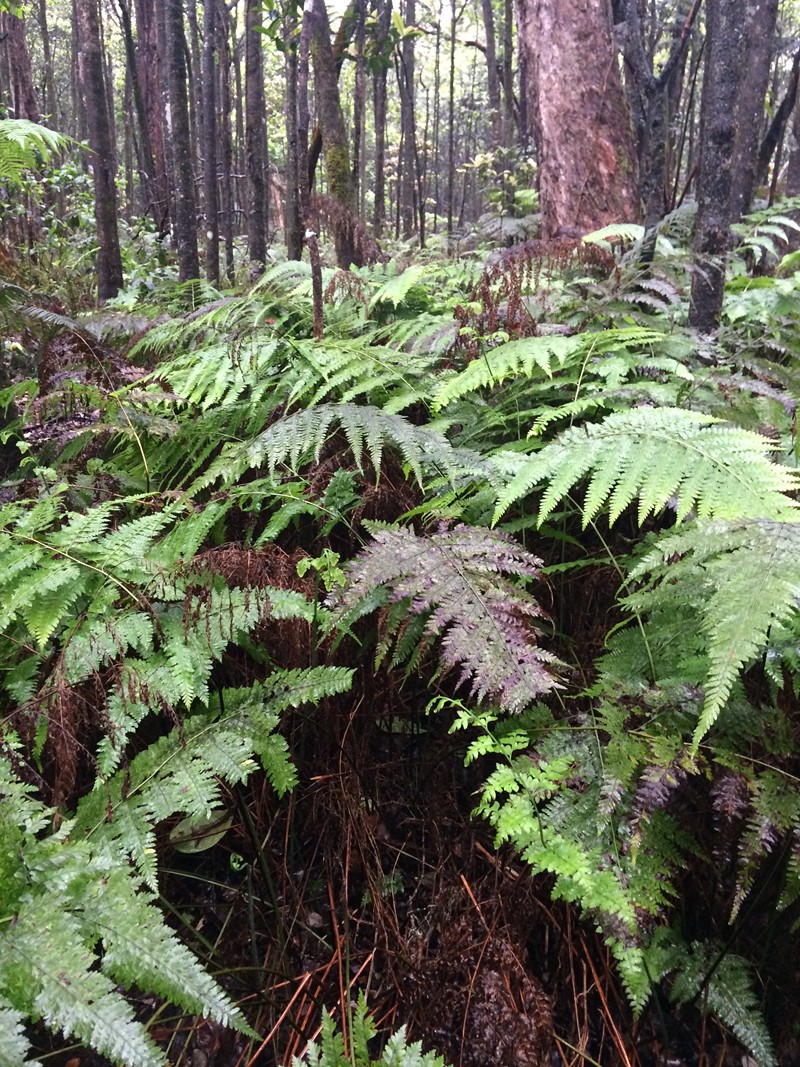 Napolo Forest |
 Napolo Forest |
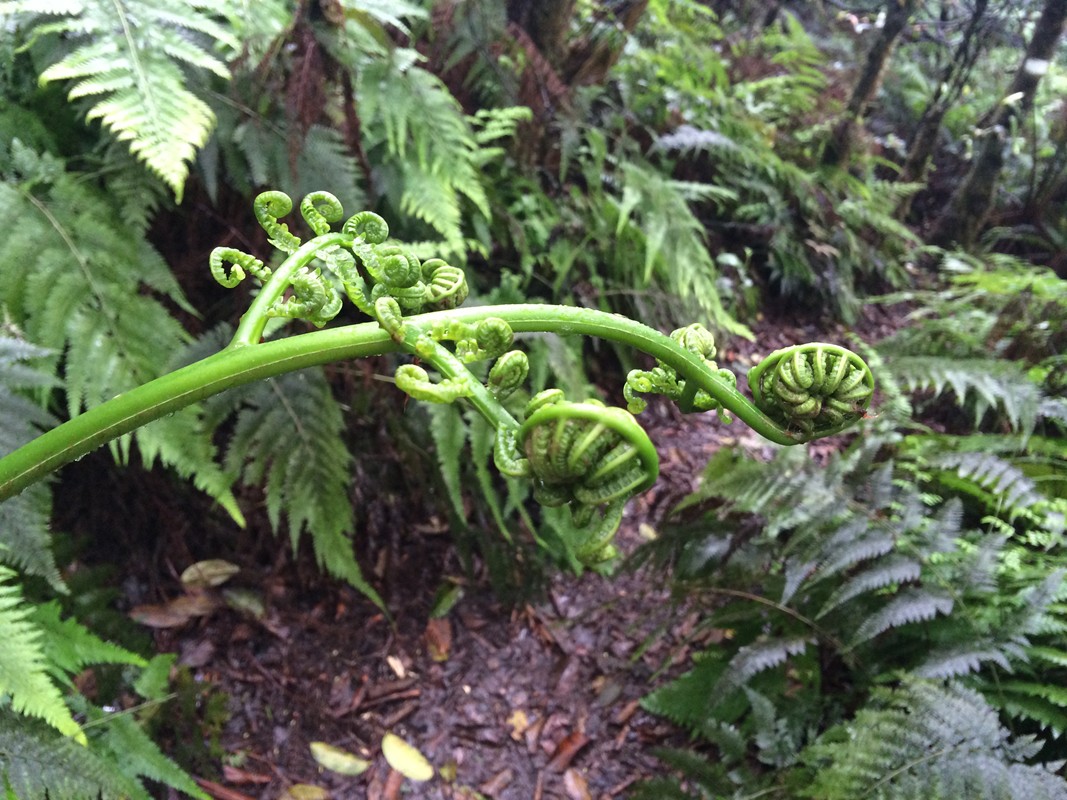
 Napolo Forest |
 Napolo Forest |
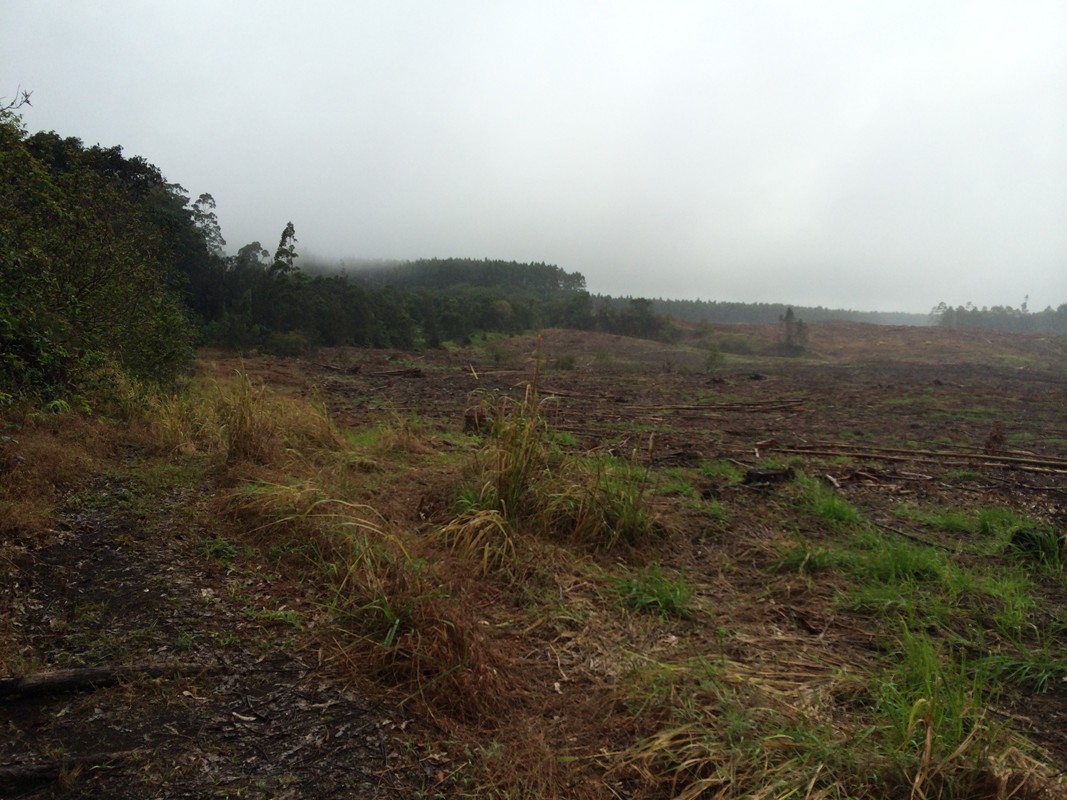 Devastation around Napolo Forest |