
Gulls circle for hooligan on the river
Taku
2015 - 1: Saak (Hooligan)
April 17-19
 Saak.
Hooligan. They've tantalized me for years, returning up the
river to welcome in the spring when boating is unreliable,
the weather cold, the ice impassible. All those fish, and so hard to
reach! I finally made it onto the river during the run last spring,
only to turn around and return home unable to reach the cabin for the
ice. I'd made the effort, I thought, best put this crazy idea of
harvesting hooligan to bed.
Saak.
Hooligan. They've tantalized me for years, returning up the
river to welcome in the spring when boating is unreliable,
the weather cold, the ice impassible. All those fish, and so hard to
reach! I finally made it onto the river during the run last spring,
only to turn around and return home unable to reach the cabin for the
ice. I'd made the effort, I thought, best put this crazy idea of
harvesting hooligan to bed.  meadows and the woods, but it was essentially a brown landscape.
Several years ago we were there in mid-May with three feet of snow
everywhere!
meadows and the woods, but it was essentially a brown landscape.
Several years ago we were there in mid-May with three feet of snow
everywhere! dipping
a few times on the way back but decided it was too awkward and unlikely
to be successful while we had to paddle, fighting the flood tide
downriver. By the time we got back to the cabin the gulls had dispersed
again. Dipping from the edge of the river was impractical due to the
steep drop off into deep water, so we decided to try the dinky little
herring gillnet that I'd bought off Amazon last year. The floats are
tiny plastic beads and the weights almost nonexistent, but it was worth
a try! With the current in the river (going either direction) there was
no chance that the light net would stay upright, so we fastened on
three lead weights that I'd used for halibut fishing at intervals
along the bottom. We tied one end to a log and attached an anchor and
float to the other end.
dipping
a few times on the way back but decided it was too awkward and unlikely
to be successful while we had to paddle, fighting the flood tide
downriver. By the time we got back to the cabin the gulls had dispersed
again. Dipping from the edge of the river was impractical due to the
steep drop off into deep water, so we decided to try the dinky little
herring gillnet that I'd bought off Amazon last year. The floats are
tiny plastic beads and the weights almost nonexistent, but it was worth
a try! With the current in the river (going either direction) there was
no chance that the light net would stay upright, so we fastened on
three lead weights that I'd used for halibut fishing at intervals
along the bottom. We tied one end to a log and attached an anchor and
float to the other end. hen
into a bucket of slushy water. We secured it from Cailey by covering it
with a tub with rocks in it, and then set about making another set.
This time we decided to lay the net out along the riverbank first
rather than trying to pay it out from the canoe where it was so prone
to tangling and snagging. I also removed the line that attached the
float to the anchor (which was itself causing a lot of snags with the
net) and used a single line to attach both the anchor and the float.
Since the current was going downriver and was difficult to fight, we
laid out the net going upriver, which turned out to be awkward trying
not to slip off the silty banks as we avoided the alder branches
leaning out toward the river. They were also a tangle hazard for the
net.
hen
into a bucket of slushy water. We secured it from Cailey by covering it
with a tub with rocks in it, and then set about making another set.
This time we decided to lay the net out along the riverbank first
rather than trying to pay it out from the canoe where it was so prone
to tangling and snagging. I also removed the line that attached the
float to the anchor (which was itself causing a lot of snags with the
net) and used a single line to attach both the anchor and the float.
Since the current was going downriver and was difficult to fight, we
laid out the net going upriver, which turned out to be awkward trying
not to slip off the silty banks as we avoided the alder branches
leaning out toward the river. They were also a tangle hazard for the
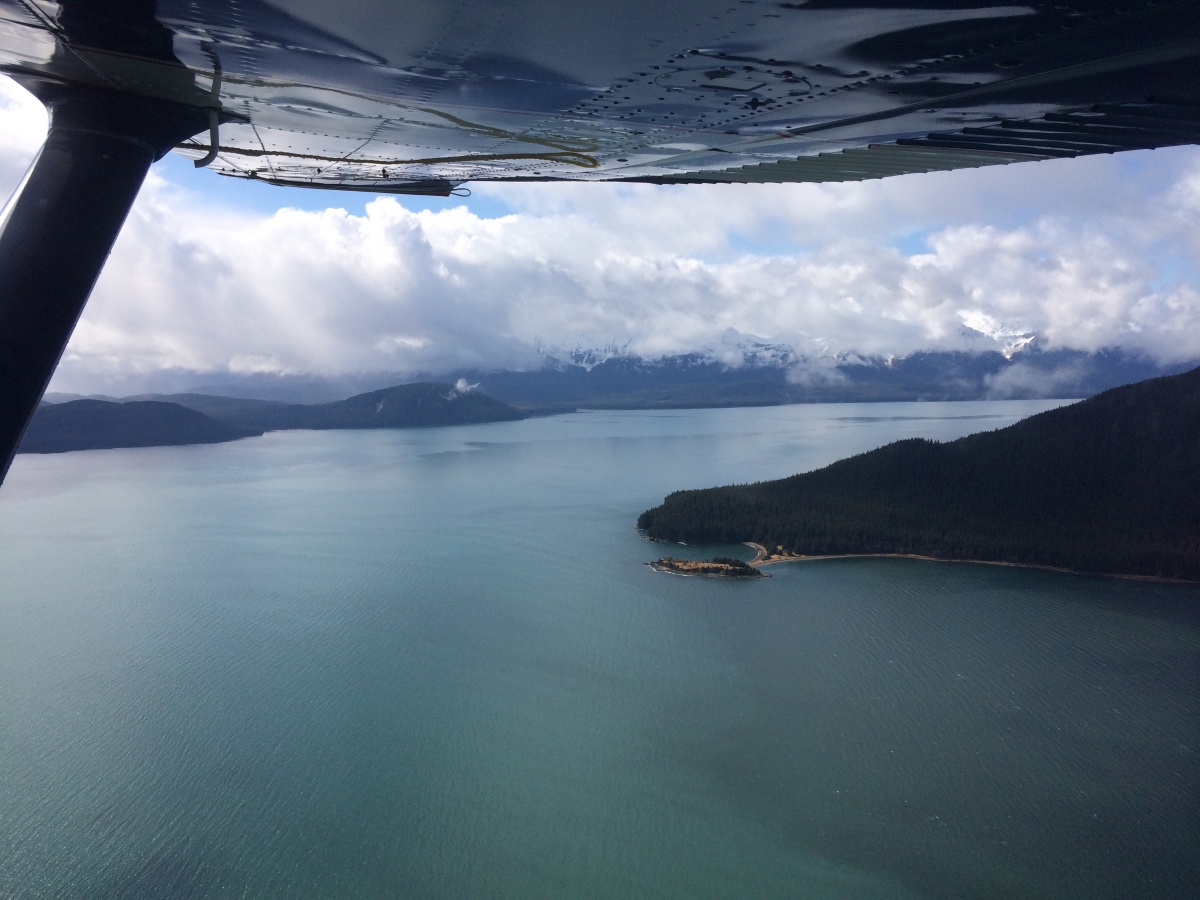
net. Flying up the river |
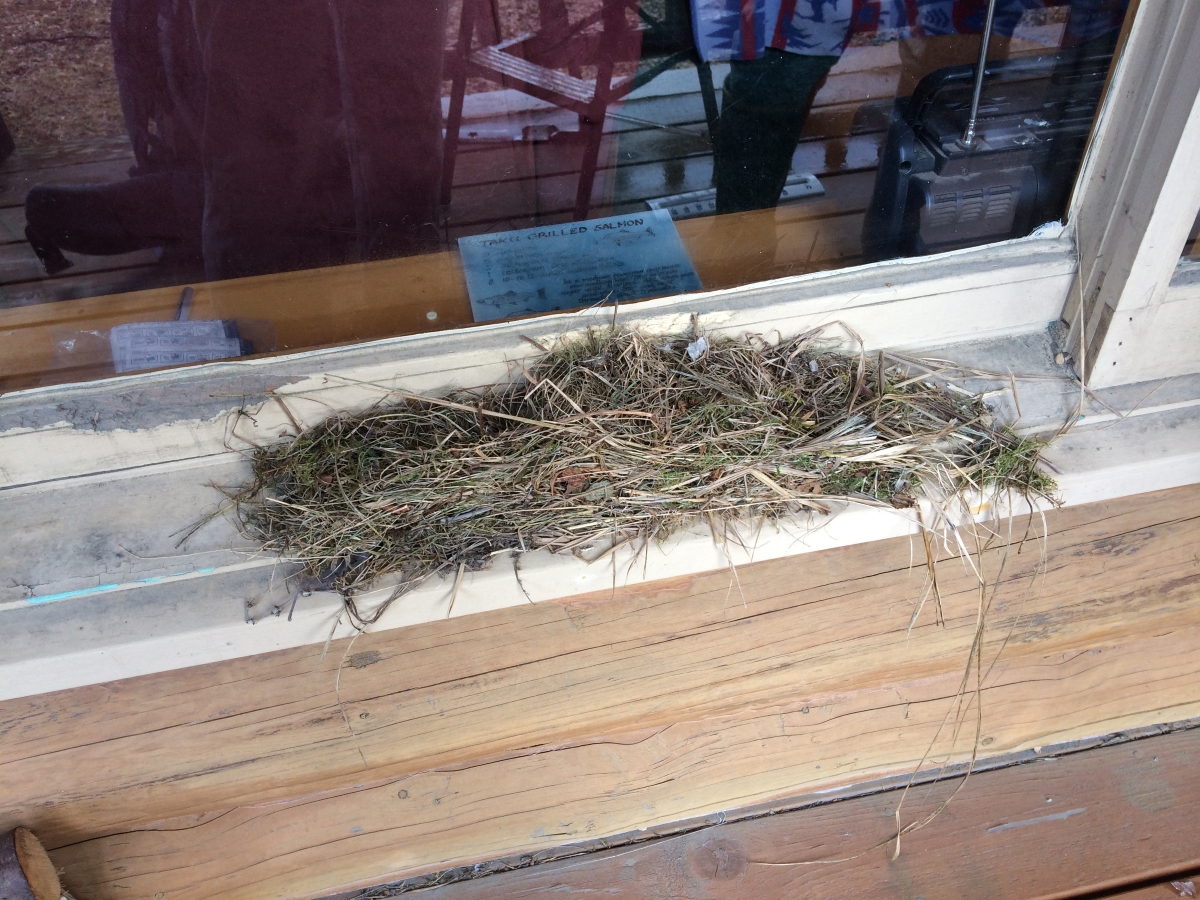 Mouse nest? |
 We take a break on the marsh upriver |
 There are Canada geese in this photo! |
 Looking downriver from the marsh |
 The river at high tide |
 A pile of fish! |
 A grip of hooligan! |
 Gunalcheesh, saak! |
 Disentangling the net |
 The net laid along the bank |
 Cleaning a male hooligan |
 The final rinse |
 Hooligan on the deck |
 Dinner! |
 Chris grills our dinner |
 position, cutting off sections that had been destroyed, and tying
intact pieces back to the top of the net if it had simply ripped loose.
We would up with two short sections salvaged from the section of net
used the day before. The rest of the net had been bundled together by
the anchor, as the net was far too long to be used in its entirety.
That section was our biggest hope, but it was also badly snarled and
full of snags. In the end, though, we made it fully operational again,
perhaps 50' of usable net, a perfect length for the river.
position, cutting off sections that had been destroyed, and tying
intact pieces back to the top of the net if it had simply ripped loose.
We would up with two short sections salvaged from the section of net
used the day before. The rest of the net had been bundled together by
the anchor, as the net was far too long to be used in its entirety.
That section was our biggest hope, but it was also badly snarled and
full of snags. In the end, though, we made it fully operational again,
perhaps 50' of usable net, a perfect length for the river.  By that time we had a plentiful catch, the
run seemed to be diminishing, and we were thoroughly cold and
exhausted. This may seem like easy business, but scrambling up and down
the slick, silty bank, paddling around, pulling nets, disentangling nets, and plucking fish from
them was tiring. Thankfully, the valley was still (no wind like the day
before), though the rain was a steady companion. We gathered all our
gear on top of the bank, then carried the cooler full of fish, the
bucket, my damp backpack and a few other items up to the lodge. Too
cold and exhausted for any more immediate work, we shed our wet and
silty gear and shuffled inside to light a fire, have a drink, and rest
for a bit. When we were ready, we put our waders back on and sat on the
edge of the front porch cleaning one tiny fish after another. The air
temp was probably 40 degrees, the ice water not much above freezing,
and each plunge into the cooler for another hooligan chilled me
further. Other than that, it was good work. We were surprised to find
that most of the catch were either males (or possibly females whose
eggs were not yet noticeable, though that seems unlikely). Of the 100
or so fish I cleaned, only perhaps 20% were girls. At first I tried to
show respect (and perhaps glean some well-needed energy) by sampling
the roe of every female, but I stopped after about ten. I know that
most people wouldn't bother to clean such numerous small fish, but I
didn't relish the idea of eating the guts, let alone the large milt
sacks filling most of the body cavities, and so we cleaned fish for
over an hour, dropping the guts back in the cooler and the cleaned fish
into the bucket. About two
thirds of the way through my hands were so cold that I could not
continue. I heated up some water and brought a pan of it onto the
porch, dipping my hands in it every five or so fish to warm up. By the
time we were done, the five gallon bucket was packed with fish (the
By that time we had a plentiful catch, the
run seemed to be diminishing, and we were thoroughly cold and
exhausted. This may seem like easy business, but scrambling up and down
the slick, silty bank, paddling around, pulling nets, disentangling nets, and plucking fish from
them was tiring. Thankfully, the valley was still (no wind like the day
before), though the rain was a steady companion. We gathered all our
gear on top of the bank, then carried the cooler full of fish, the
bucket, my damp backpack and a few other items up to the lodge. Too
cold and exhausted for any more immediate work, we shed our wet and
silty gear and shuffled inside to light a fire, have a drink, and rest
for a bit. When we were ready, we put our waders back on and sat on the
edge of the front porch cleaning one tiny fish after another. The air
temp was probably 40 degrees, the ice water not much above freezing,
and each plunge into the cooler for another hooligan chilled me
further. Other than that, it was good work. We were surprised to find
that most of the catch were either males (or possibly females whose
eggs were not yet noticeable, though that seems unlikely). Of the 100
or so fish I cleaned, only perhaps 20% were girls. At first I tried to
show respect (and perhaps glean some well-needed energy) by sampling
the roe of every female, but I stopped after about ten. I know that
most people wouldn't bother to clean such numerous small fish, but I
didn't relish the idea of eating the guts, let alone the large milt
sacks filling most of the body cavities, and so we cleaned fish for
over an hour, dropping the guts back in the cooler and the cleaned fish
into the bucket. About two
thirds of the way through my hands were so cold that I could not
continue. I heated up some water and brought a pan of it onto the
porch, dipping my hands in it every five or so fish to warm up. By the
time we were done, the five gallon bucket was packed with fish (the previous day's catch would have topped it
off) and the cooler was a murky sludge of river water, guts, eggs, and
milt. We shiveringly carried it down to the shore and returned the
contents to the river. A big dinner of pasta and salad rejuvenated us
somewhat. Afterwards, I brought the bucket of fish in and rinsed each
in a basin of fresh water (using most of our reserves) before laying
them on paper towels to dry. I bagged them 24 at a time in the ziplocks
I'd brought along for that purpose and plugged the freezer, spilling
over into the fridge.
previous day's catch would have topped it
off) and the cooler was a murky sludge of river water, guts, eggs, and
milt. We shiveringly carried it down to the shore and returned the
contents to the river. A big dinner of pasta and salad rejuvenated us
somewhat. Afterwards, I brought the bucket of fish in and rinsed each
in a basin of fresh water (using most of our reserves) before laying
them on paper towels to dry. I bagged them 24 at a time in the ziplocks
I'd brought along for that purpose and plugged the freezer, spilling
over into the fridge.  Net repair |
 Laying the net out before high tide |
 Letting the net soak |
 That's the float on the end of the net |
 Chris pulls a set full of hooligan |
 Ready for a high tide set |
 One batch of hooligan waiting for the freezer |
 It's been a long day! |
 Trail to the meadow |
 Snowless meadow |
 Hooligan remains |
 Low river |
