September 1-5

Red-necked phalaropes in Taku Inlet
Snettisham
2011 - 8: The Power of a Spark Plug
September 1-5
Red-necked phalaropes in Taku Inlet
 I’m
in the lodge at Snettisham as I write this, keeping an
eye out for bats. It’s a calm night, the
inlet misty and the rain falling satisfyingly on the roof.
A few minutes ago I saw the first confirmed bat
of the season—a very bold individual who swept back and forth inside
the porch,
disappearing from view above the picture window and maybe even making
contact
with the porch (I heard little clicking noises when he was up there a
few
times). Then he disappeared so fast I
wondered if he had roosted? After
about
five minutes I finally saw a glimpse of a bat downriver and a few
moments
later, a bat flew out from my porch! Of
course it’s possible that the downriver bat had flown in without my
seeing him,
but by that time I was watching at the window.
I think a bat actually roosted momentarily under the porch! That’s a good sign, as there is no evidence
that
bats have checked out my bat house this summer in any way.
I’m
in the lodge at Snettisham as I write this, keeping an
eye out for bats. It’s a calm night, the
inlet misty and the rain falling satisfyingly on the roof.
A few minutes ago I saw the first confirmed bat
of the season—a very bold individual who swept back and forth inside
the porch,
disappearing from view above the picture window and maybe even making
contact
with the porch (I heard little clicking noises when he was up there a
few
times). Then he disappeared so fast I
wondered if he had roosted? After
about
five minutes I finally saw a glimpse of a bat downriver and a few
moments
later, a bat flew out from my porch! Of
course it’s possible that the downriver bat had flown in without my
seeing him,
but by that time I was watching at the window.
I think a bat actually roosted momentarily under the porch! That’s a good sign, as there is no evidence
that
bats have checked out my bat house this summer in any way.
It’s the end of a long day.
Having made zero progress at Snettisham since mid-June, I’d been
pondering a four day weekend over Labor Day to work.
The same projects haunted me that I’d left
undone last summer: interior trim (the trim pieces were still sitting
on the
floor getting in the way) and railings for the higher porches. For the latter project I’d finally decided to
simply hold off installing a railing system on the lodge porch for now,
as the
top of the rail would badly impede the view, and just concentrate on
Cottonwood. If I ever open it as a
commercial lodge, I’ll
have to give in, but why rush? May as
well enjoy the view, as a commercial operation is not in my immediate
future.
As the week progressed, however, my motivation suffered. Chris and I had returned from our vacation in Adak early Monday morning and gone straight to work. As Adak was full of adventures, I never got enough sleep, and work was exhausting when I returned. Consequently, I began to ponder a Friday departure instead of Thursday night, and even considered calling it off if the weather was poor.
Which it looked to be. Friday was supposed
to have four foot seas, which were to keep up all weekend.
On Wednesday night, the forecast called for
seas two feet or less (the best possible forecast) for Thursday night,
apparently the calm before the storm. It
said the same thing Thursday morning. It
seemed that I had to leave that night if I was to get to Snettisham
over the
weekend (a forecast of four foot seas in September is quite likely to
be
accurate). And so I spent a long lunch
hour tracking down porch railing material (a hand rail for the stairs
and 2x4s
for the horizontal pieces to support the balustrades at Valley Lumber
and 4x4
posts for the corners at Home Depot, all cedar) as well as PT 2x4s for
the
bottom my future shed, another project I’d been pondering. I also filled jerry jugs with gas and packed
up at home. September brings early
nightfall (sunset that night was at 8:00) which makes it stressful to
leave after
work. The endless summer evenings I can
rely on earlier in the summer have passed and it gets dangerous on the
water
after dark. So I wound up going back to
work for two hours, then leaving early to finish packing, load the
boat, fuel
the boat, and get underway. For once I
loaded at an extremely high tide, which made the ramp almost horizontal
(and
carrying lumber easy), but made me very nervous about the state of my
skiff
sitting on the beach at Snettisham.
Would it be floating? Did I leave
enough slack in the anchor lines on either side of the boat to allow it
to
float with the incoming tide or would they hold the boat down and allow
water
to flow over the sides? Would the bilge
pump, after all the heavy rains, still work?
There was only one way to find out.
I met my goal of leaving the harbor around
5:00, giving me three solid hours until nightfall.
In my haste I’d left out the liquor store
stop, so I drank water instead of beer to celebrate leaving the harbor. The water was calm, the afternoon lovely. It was, in fact very close to a perfect
September day. The ocean was glassy, the
air sharp and crisp with fall, the sun yellow and bright as it dropped
to the
horizon. The clouds lingered, however,
revealing
pockets of blue sky but hanging low around the mountains and hiding the
sun
behind a high haze over Admiralty. In
Taku Inlet I saw splashing and quickly recognized the characteristic
rooster
tails of Dall’s porpoises! I politely
slowed and moved past them—a group of four, I think, with one smaller
individual—watching their white sides gleam in the sunshine. They passed through my stern wake and kept
going, disappearing for a few minutes before resuming their zooming
closer to
Point Arden. After waiting for them to
reappear one more time, I left them to their fun and continued south. Taku Inlet was full of debris, presumably from
the heavy rains flooding the Taku. Among
the flotsam I came across several flocks of red-necked phalaropes
charmingly
paddling about—en encounter that’s becoming a fall tradition.
At Grave Point I saw the blows—a line of them in
the
distance against the dark shore of Port Snettisham.
Having seen none so far, I thought this was a
good sign that I might catch a glimpse of the Stephen’s Passage Group
Up. I found them at the bight south of
Limestone
Inlet, five whales together, all but one of which had white spots on
its tail. The air was so calm that their
blows ascended
straight into the air and lingered there.
I puttered after them, hoping for a closer encounter, but they
fooled me
and turned around, coming back up far behind me and closer to Limestone
Inlet. While shut down and waiting,
however, I
counted four or five other whales farther away, their blows giving
themselves
away even when I was too far to hear them.
The low sun, glassy water, and clouds made serene and stunning
scenes
all around me.
 A fine day, looking between Grave and Grand |
 Dall's porpoises' rooster tails |
 Devil's Paw (looking up the Taku) |
 Red-necked phalaropes |
 Whale |
 Blows |
 Admiralty Island |
 Mainland shore |
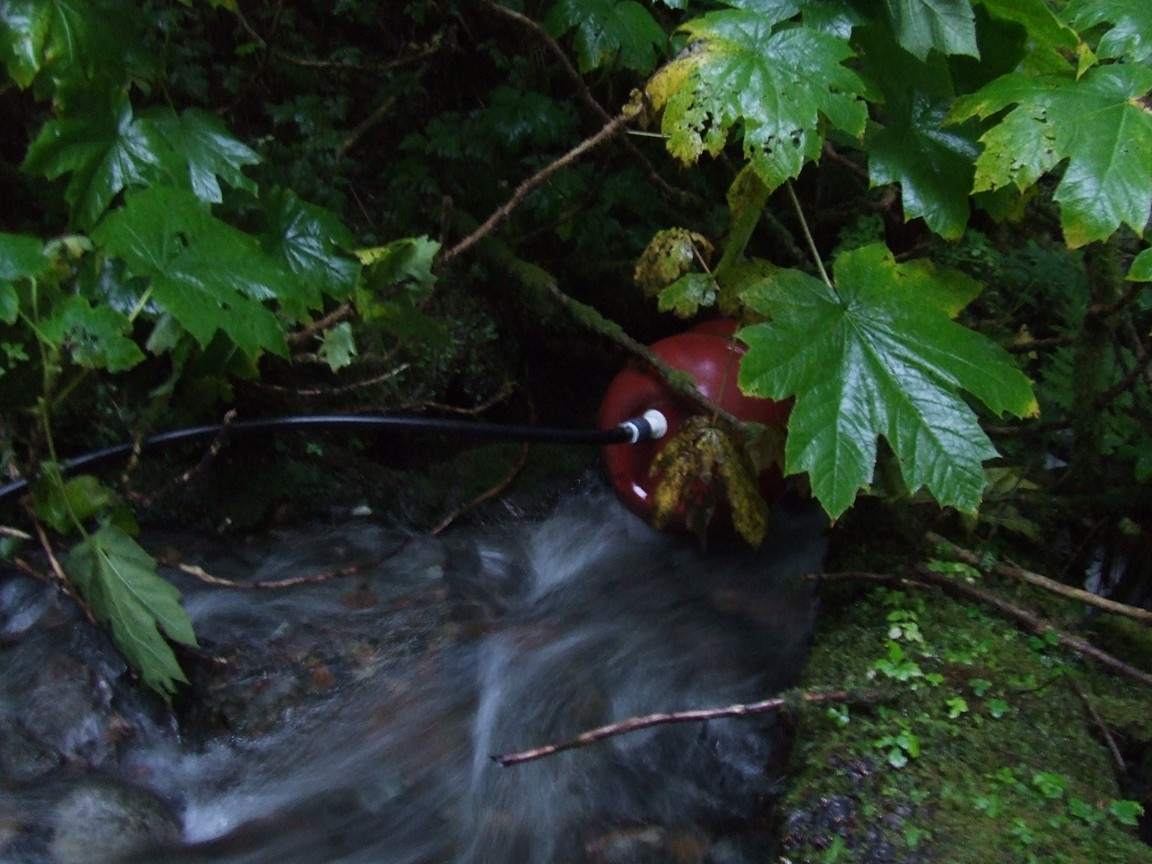 Olive barrel stuck |
While I worked on these tasks, I was often
distracted by the
bird activity outside (fall seems to bring an unusually large and
lively bunch
of sparrows, warblers, thrushes, and other song birds to feed on the
nearby
currents, seeds, and insects), and whales.
Much to my surprise, two whales had been feeding in the inlet
and Gilbert
Bay all morning, a phenomenon that rarely occurs much past June. The first one I saw made me suspect minke
whale, due to its quick disappearance, low profile, and silent blow. However, all whales turned out to be
humpbacks, but the conditions kept even the close blows silent. I was also pleased to see a beautiful, dark
juvenile eagle fly past and, to my delight, land near the resident nest
under
the eyes of the two adults! So they had
raised an eaglet after all. Since I’d
not seen nor heard an eaglet in August, when most eaglets are showing
up at the
edges of their nests, I thought their efforts had failed.
But here he was, flying back and forth,
screaming in the trees to the left of the lodge and near his nest, key
locations in his parents’ territory. I
named this formerly quiet fledging Charlie.
I also had a junco hit one of the windows and fall, stunned, to
the
ground. I brought him inside and placed
him in a tote to recover; after about 20 minutes he was pecking at the
corner
of it, so I took it outside and he flew to a nearby branch where he
stayed
several minutes, long enough for me to photograph him.
He seemed no worse the wear. I have
no known window fatalities this summer
since I put up the reflective decorations on the outsides of the
windows.
Outside I checked the oil on the generator, filled
the gas
tank, and….cranked and cranked. I knew
someday that my extremely reliable little generator would fail, and
today was
that day. I dug around until I found the
spark plug removal tool and, after satisfying myself that I had no
spare
generator spark plug, removed the existing one and cleaned it as well
as I
could. It was, not unexpectedly, rather
dirty and corroded. I wiped it down,
cleaned out the gap, and tried again.
Nothing. So I tried again.
Nothing.
And so, by noon, my entire weekend plans were shot. Everything I wanted to work on (trim,
railings, and shed) required power tools.
Not even the breaching whale in Gilbert Bay brightened my
spirits much
(four breaches and a caudal-peduncle thrown).
It was an unhappy time and I seriously considered returning to
Juneau
right then. The inlet was perfectly calm
with every indication was that the storm hadn’t hit yet.
It might be my last chance, I thought, for a
calm ride home, and I could make no progress here.
The only good reason to stay was to work on
the riverboat engine and try to get it started—another opportunity for
failure. So that’s what I did, but not
right away. First I had lunch, read for
quite a while on the couch, and took a nap.
After all, what was the hurry?
 I woke up at 3:00, geared up (in overall rain pants,
rain coat,
and xtratufs), and went straight outside.
The tide was creeping up on the stern of the riverboat but I
still had
several dry feet to work on. I brought
down a hammer, gloves, tote, and a small piece of lumber with me and
got to
work, watched by a neaby seal (see photo to left).
The whole thing took about ten
minutes. I unscrewed the six screws
holding up the foot, as well as the two side screws whose function I
wasn’t
sure of, but figured it must be related to holding the foot in place. Then I tapped it gently until it fell into the
tote below (which was helping me make sure I didn’t lose any parts). Then I placed the piece of wood against the
impellor, tapped it with a hammer and….it moved. It
moved!
Soon I was able to wiggle it with my fingers, then turn it all
the way
around. Lots of sand and grit was
revealed, so I sloshed a bunch of water inside to flush it out, cleaned
off the
foot, and began putting it back on, first making sure that I could also
pull
the starter cord.
I woke up at 3:00, geared up (in overall rain pants,
rain coat,
and xtratufs), and went straight outside.
The tide was creeping up on the stern of the riverboat but I
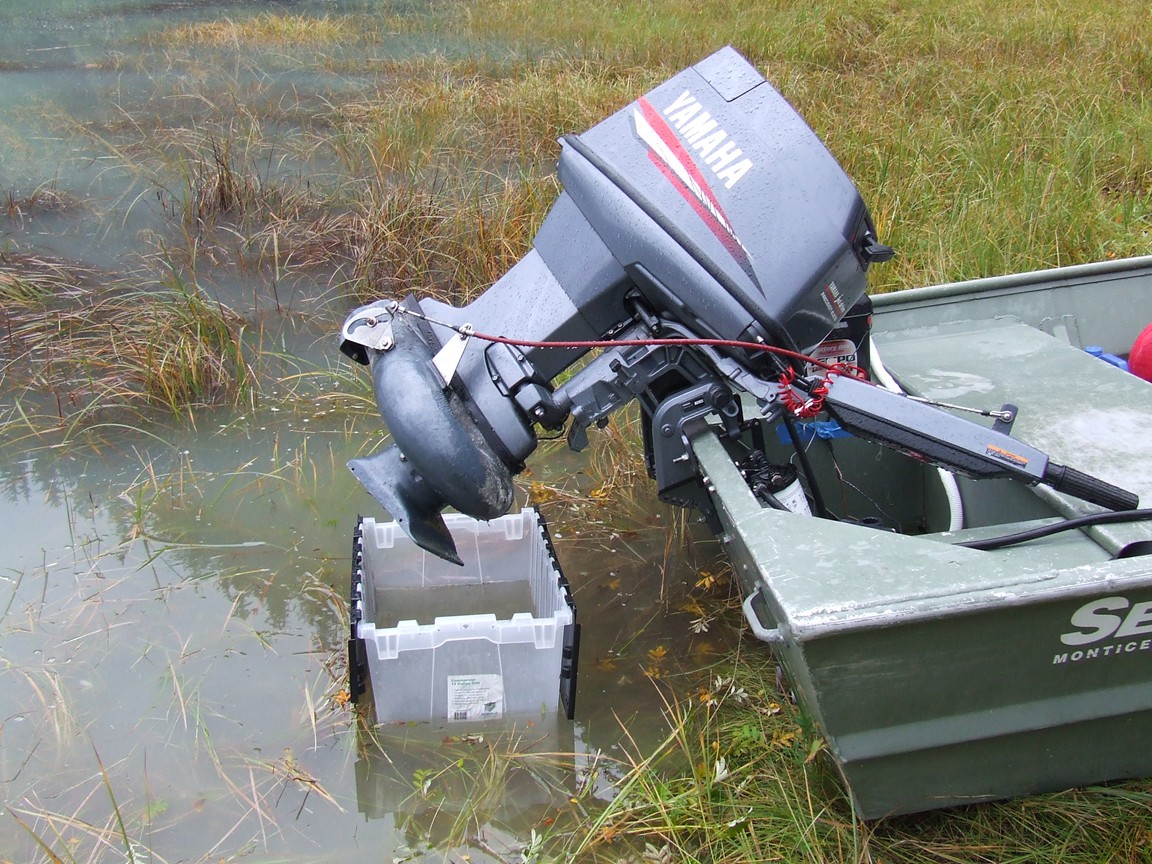
still had
several dry feet to work on. I brought
down a hammer, gloves, tote, and a small piece of lumber with me and
got to
work, watched by a neaby seal (see photo to left).
The whole thing took about ten
minutes. I unscrewed the six screws
holding up the foot, as well as the two side screws whose function I
wasn’t
sure of, but figured it must be related to holding the foot in place. Then I tapped it gently until it fell into the
tote below (which was helping me make sure I didn’t lose any parts). Then I placed the piece of wood against the
impellor, tapped it with a hammer and….it moved. It
moved!
Soon I was able to wiggle it with my fingers, then turn it all
the way
around. Lots of sand and grit was
revealed, so I sloshed a bunch of water inside to flush it out, cleaned
off the
foot, and began putting it back on, first making sure that I could also
pull
the starter cord.
By this time the water was about a foot from the
boat and
flooding the cracked tote I was using underneath. When
I was finished, I was standing in water
nearly over the tops of my boots and it was creeping under the hull. I wiggled the boat and guessed that I’d be
able to push it off very soon. In the
meantime, I checked on a couple of the cottonwoods I’d planted
downriver from
the lodge. The heavy rains had created a
stream close to the farther one which did not appear to be doing well
in its
soggy ground; the individual in the log, however, seemed just fine. Then I puttered around the lodge, moving the
lumber I’d staged next to the porch for the shed project back toward
the main
lumber storage area to put away for the winter.
I also checked on the firewood pile in preparation for moving
some under
the lodge porch.
 By then it was easy to shove the boat right into the
water. I grabbed my backpack and took
off, drifting offshore only to discover that the engine would no longer
turn
over—the cord was frozen. Frustrated, I
went back to shore, brought the stern in, and started the process over
again. I’m guessing that more grit got
lodged in the wrong places in the process of moving the boat and
lowering the
engine into the water. This time I
thought I’d take the boat for a little spin before putting the foot
back on to
further cleanse it before going through the laborious process of
tightening all
the screws (which are so close to the side of the foot that even my
smallest
socket has trouble). All went well; I
headed to the Ronquil, grabbed a life
jacket and my fishing rod, and returned to shore to replace the foot.
By then it was easy to shove the boat right into the
water. I grabbed my backpack and took
off, drifting offshore only to discover that the engine would no longer
turn
over—the cord was frozen. Frustrated, I
went back to shore, brought the stern in, and started the process over
again. I’m guessing that more grit got
lodged in the wrong places in the process of moving the boat and
lowering the
engine into the water. This time I
thought I’d take the boat for a little spin before putting the foot
back on to
further cleanse it before going through the laborious process of
tightening all
the screws (which are so close to the side of the foot that even my
smallest
socket has trouble). All went well; I
headed to the Ronquil, grabbed a life
jacket and my fishing rod, and returned to shore to replace the foot.
When I brought the stern around, though, the
impellor
suddenly looked different—naked in fact!
So much more of it was exposed! What
was going on?! I was confused. And then it dawned on me….the liner that
encloses it was gone (….and that’s when I realized what those side
screws were
for). I’d kept unscrewing them, which
meant that I left the liner around the impellor instead of inside the
foot
where I should have left it. I inspected
the area where I’d taken off the foot the last time, but found no liner. No matter, I could find it at low tide the
next day (it had to have fallen off between shore and the boat, which
had gone
aground that morning), but what to do in the meantime?
Well, I happened to have a spare.
Actually, the original liner had been
replaced along with the new impellor at the shop, so this was the older
one,
which was still perfectly functional. I
managed to screw it onto the foot and put the whole thing back together
again. Is it shimmed properly? Probably not, but I’ll worry about that
another time. For now, the river was
calm, the water was high, and I wanted to take my boat for a spin.
 Had
I gotten underway a little earlier, I might have headed
out into Gilbert Bay first, but the tide was already about to turn, so
I decided
to head upriver first. It felt wonderful
to zoom along with a working riverboat again.
I went straight to Whiting Point and then over to the southern
shore,
taking advantage of the tide to check out the biggest creek coming down
on that
side, where I think my dad says there are trout. A
bunch of rocks marked the outlet of the
stream and, just upriver, an enormous sandbar blocked my way (see photo
to left). I saw it coming and shut down,
drifting back
into deeper water again before starting the motor. This
time I headed back to the main channel
and, failing to see any deep water crossing the river, headed straight
up the
obvious deep channel toward Seal Sandbar where I could see them lying. Many seals occupied the channel on the way
and were amazingly unafraid, peering at me for long periods of time as
they
swam. They seemed less afraid of me when
the boat was running, surprisingly, than when I was shut down. I slowed down as I neared their haulout
(barely underwater), then crept forward slowly.
Somewhat past their sandbar, the deep channel ended in a point;
the
seals beyond that hunched themselves through the shallow water. Nor could I see any more promising leads
toward the other side, so I was stymied again. It’s
all very puzzling.
Had
I gotten underway a little earlier, I might have headed
out into Gilbert Bay first, but the tide was already about to turn, so
I decided
to head upriver first. It felt wonderful
to zoom along with a working riverboat again.
I went straight to Whiting Point and then over to the southern
shore,
taking advantage of the tide to check out the biggest creek coming down
on that
side, where I think my dad says there are trout. A
bunch of rocks marked the outlet of the
stream and, just upriver, an enormous sandbar blocked my way (see photo
to left). I saw it coming and shut down,
drifting back
into deeper water again before starting the motor. This
time I headed back to the main channel
and, failing to see any deep water crossing the river, headed straight
up the
obvious deep channel toward Seal Sandbar where I could see them lying. Many seals occupied the channel on the way
and were amazingly unafraid, peering at me for long periods of time as
they
swam. They seemed less afraid of me when
the boat was running, surprisingly, than when I was shut down. I slowed down as I neared their haulout
(barely underwater), then crept forward slowly.
Somewhat past their sandbar, the deep channel ended in a point;
the
seals beyond that hunched themselves through the shallow water. Nor could I see any more promising leads
toward the other side, so I was stymied again. It’s
all very puzzling.
 The current was carrying me back down, so I shut
down and
drifted, thinking I’d be able to keep a close eye out for deep water
channels
connecting to the one I was in. The
drizzle
at the start of the trip had turned into a long term downpour by then. But the seals were all around me, so I got out
my camera and became absorbed in trying to photograph them. In the meantime, I wasn’t paying attention,
and finally noticed that I was drifting nearer a sandbar and would need
to move
to one side of it or the other, both of which seemed promising. I started up the engine before it occurred to
me that I should check the water depth.
It was still green and appeared deep there, but it turned out
that I’d
already come up on the edge of the sandbar.
The water roiled brown and I shut down, but too late. The engine was full of sand and stuck.
The current was carrying me back down, so I shut
down and
drifted, thinking I’d be able to keep a close eye out for deep water
channels
connecting to the one I was in. The
drizzle
at the start of the trip had turned into a long term downpour by then. But the seals were all around me, so I got out
my camera and became absorbed in trying to photograph them. In the meantime, I wasn’t paying attention,
and finally noticed that I was drifting nearer a sandbar and would need
to move
to one side of it or the other, both of which seemed promising. I started up the engine before it occurred to
me that I should check the water depth.
It was still green and appeared deep there, but it turned out
that I’d
already come up on the edge of the sandbar.
The water roiled brown and I shut down, but too late. The engine was full of sand and stuck.
 Shocked by being in the same predicament as before,
for
completely unnecessary reasons, I first tried to paddle, then walk my
way off
the sandbar. I first started heading to
the middle of the river and the seals, but quickly turned around and
headed back
to the shoreline where there were several grassy beaches which seemed
like good
places for boat work. I didn’t want to
work in the swift water and rocky shoreline closer to Whiting Point,
which is
where I would have wound up in the other channel.
Shocked by being in the same predicament as before,
for
completely unnecessary reasons, I first tried to paddle, then walk my
way off
the sandbar. I first started heading to
the middle of the river and the seals, but quickly turned around and
headed back
to the shoreline where there were several grassy beaches which seemed
like good
places for boat work. I didn’t want to
work in the swift water and rocky shoreline closer to Whiting Point,
which is
where I would have wound up in the other channel.
But, I was still a good distance from shore and it
took
quick a bit of paddling, rushing from one side of the boat to the other
to keep
a straight trajectory. The current became
swifter close to shore and I missed the first two beaches I had in mind. The third turned out to be a winner, though,
with deep water close to shore on one corner of it.
I brought the boat in, turned it around, and
started taking off that darned foot again.
This time it didn’t even take a hammer to move the impellor once
the
foot was off—I could do it with my hands.
I rinsed it all off, rinsed the foot off, and put it back on
again,
checking periodically to make sure the starter cord still worked. Fifteen minutes after reaching shore, I
pushed off, pointed my way downriver and away from the sandbar
developing
offshore and….the starter cord wouldn’t move.
It was the same thing that had happened the last
time,
probably for the same reason. Furious,
but also resigned, I padded back to the beach and did the whole thing
over
again, more carefully flushing the impellor once the foot was off. I checked the starter cord after every screw
went
on and all seemed to be going well. This
time when I set out I very, very gently let down the engine and it
started
without a hitch. I was off, and would
return home under power! I let the
engine warm up a bit, then got up to speed, cruising past Whiting Point
with
the seals. I could see the tops of logs
sitting on emerging sandbars to the left, so decided to follow the main
channel, even though it was not at that time outlined with visible
sandbars. I crossed almost straight to
the meadows above Nigel Falls and Ox Point where I hugged the shoreline
and
then cruised downriver past two points.
I think the channel crosses the river there, so I headed away
from
shore, but quickly realized that there was still ample water everywhere
in that
part of the river and made my way straight back to the homestead.
When I got to the homestead, though, I discovered
that I
wasn’t quite ready to call it quits, so I headed toward River Point. The storm that had held off all day appeared
to have finally hit while I was underway.
The flat river had given way to strong chop as I crossed beyond
Whiting
Point, but surprisingly the chop diminished the further I got downriver
until I
found Gilbert Bay and beyond to be flat calm.
Very puzzling. I zoomed around
the corner, past several points and to the first creek along that
stretch,
curious if the heavy August rains had encouraged any cohos to spawn
early. Unable to resist peering upcreek, I
brought
the boat ashore, tied its line to a rock, and hustled up the beach
until I
could see the creek beyond where it turned a corner and entered the
woods. Unlike my visit last September,
there was
ample water for cohos to make it into the creek as it flushed down over
the
beach rocks, and the creek above looked ideal.
However, I saw no sign of fish.
Concerned about the falling tide, I took a couple
of
pictures and hastened to the river boat.
Back at the homestead, I brought it up onto the beach and
anchored
it. The tide early tomorrow morning is
much lower than it will be in the afternoon, so it probably won’t move
at all
and, if it does, it will float again in the afternoon.
Chilled and hungry, I lit a fire and a couple
of propane lights, had dinner, and started typing.
 Thrush |
 The junco that hit the window |
 After fixing the engine |
 Seals on Seal Sandbar |
 The channel ENDS |
 Looking upriver from Seal Sandbar |
 So
I had a chunk of bread smeared with nutella and peanut
butter, grabbed my (formerly) waterproof oilskin hat, my bib rubber
rain pants,
and oversized red raincoat and headed outside.
I actually like working in the rain like that!
I started out by bringing firewood from the
staging area near the start of the boardwalk under the porch via
wheelbarrow. Both my attempts at making
a ramp between the boardwalk and the top of the deck failed (I think
the boards were too slippery), so I wound up just lifting the front of
the wheelbarrow up
each time. By the time I’d brought over
two loads of the bucked up branches that the boys cut in June, I had to
stop
and take off my warm shirt. I worked in
a t-shirt (under the raincoat) from then on.
I also stacked up the small bit of alder they’d cut and the rest
of the
longer pieces of lumber I’d had stacked under a tarp nearby for making
bonfires. Then I finished the job by
bringing over all the firewood that Gabe chopped last summer, making a
nice
stack for next summer. I really enjoy
homestead-like tasks like that….getting ready for winter (even though
I’m not
here during the winter). I carefully
covered all the remaining rounds and the branches that are too big for
the wood
stove and weighed down the tarp.
So
I had a chunk of bread smeared with nutella and peanut
butter, grabbed my (formerly) waterproof oilskin hat, my bib rubber
rain pants,
and oversized red raincoat and headed outside.
I actually like working in the rain like that!
I started out by bringing firewood from the
staging area near the start of the boardwalk under the porch via
wheelbarrow. Both my attempts at making
a ramp between the boardwalk and the top of the deck failed (I think
the boards were too slippery), so I wound up just lifting the front of
the wheelbarrow up
each time. By the time I’d brought over
two loads of the bucked up branches that the boys cut in June, I had to
stop
and take off my warm shirt. I worked in
a t-shirt (under the raincoat) from then on.
I also stacked up the small bit of alder they’d cut and the rest
of the
longer pieces of lumber I’d had stacked under a tarp nearby for making
bonfires. Then I finished the job by
bringing over all the firewood that Gabe chopped last summer, making a
nice
stack for next summer. I really enjoy
homestead-like tasks like that….getting ready for winter (even though
I’m not
here during the winter). I carefully
covered all the remaining rounds and the branches that are too big for
the wood
stove and weighed down the tarp.
At that point I took a break from heavy labor and
went on my
COASST survey, finding a couple of full salmon carcasses along the way. Back at the lodge I found several pieces of
2x8 PT scraps and nailed them against one another on the side of the
tree I’d
been using to winch the riverboat in. I
haphazardly attached the winch to the top with nails and gave a trial
run with
a branch. We’ll see if it works with the
boat, but so far so good. I think it’ll
be much easier to haul the boat in with a stable platform like that
than with a
freely-suspended winch.
Then I unhooked the hose from its Freshet Jr.
duties and
hauled it to Harbor Seal where I used it to finally rise the silt and
salt from
the front wall in preparation for protecting it over the winter. I stowed the hose inside to keep it safe from
bears and, on the way back, wrapped up the cabin outhouse for the
winter. I also sprayed all the doorknobs,
door
hinges, and water system valves with WD-40 to help protect them over
the
winter. Finally, I laid out the pieces
of asphalt shingles I’d cut to add traction to the boardwalk and nailed
them
down with joist hanger nails. It looks a
little busy, but I think it’ll be functional.
It was nearly 2:00 by then, and I was ready for a break after
sitting on
the boards for half an hour pounding nails.
I was, in fact, rather sore all over from whatever I was doing
yesterday. As I shed my gear on the
porch I realized that I was, in fact, getting rather chilled. Despite the raingear, most of my pants were
wet along with my socks and the back of my t-shirt.
I lit a fire, changed clothes, and had lunch
in front of the wood stove. The rain
continues and I’m out of outdoor chores for the moment, so I’m inside
until
high tide when I’ll bring the riverboat back up on the beach.
 Self-portrait: I'm very wet |
 It's very wet outside |
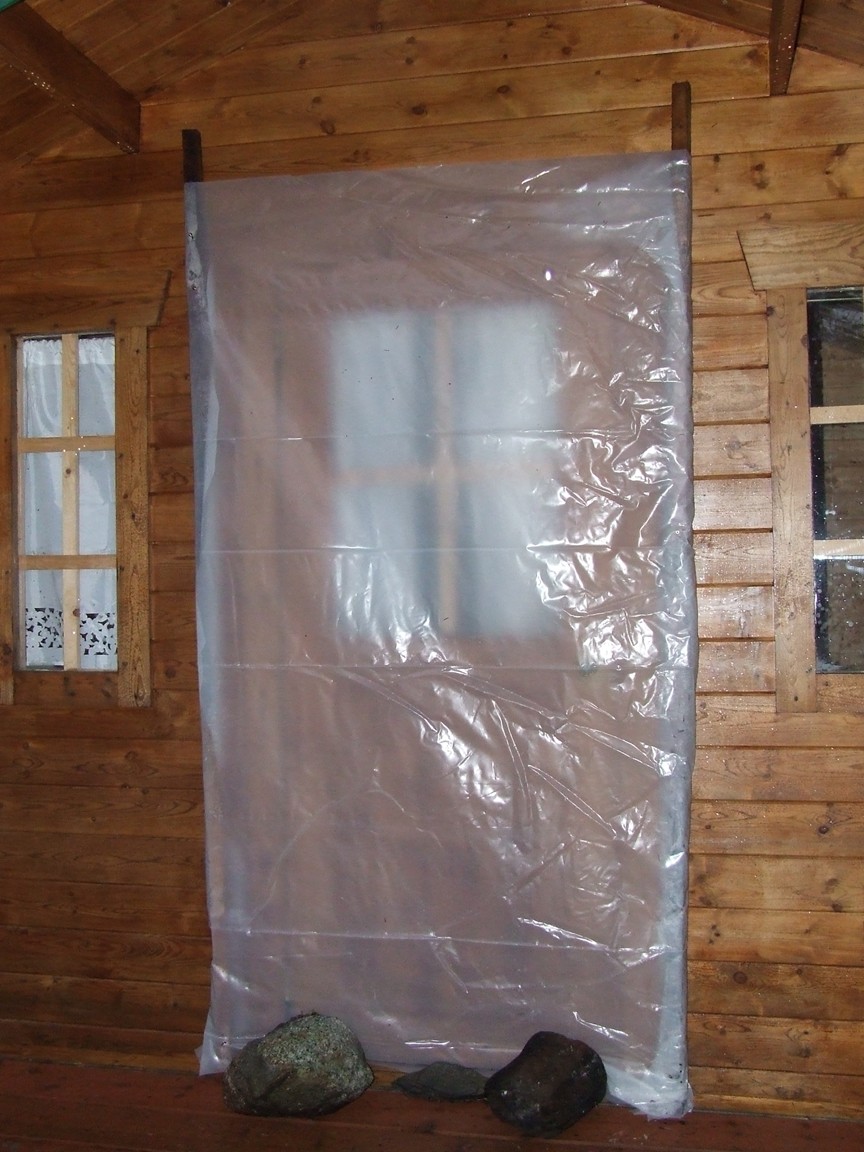 Harbor Seal door protected for the winter |
This afternoon I pulled the riverboat up onto the
beach just
before high tide, a little downriver of its previous beaching spot
where the
ground has a more gradual slope, and tried out my new winch system. It didn’t work. The
pull of the boat was too great both for
the nails I was using to hold the winch to the boards (I first
reinforced
them), then for the boards themselves, which pulled away from the tree
despite
my many nails. I first went back to the
original system, attaching the winch to a chain around the tree, but
quickly
found that the angle was slightly wrong and the line was fraying itself
on the
side of the winch from coming in at the wrong angle.
I decided to try another tree farther up that
seemed like it would have a better angle, but I found I had
overcompensated and
had the same trouble in the opposite direction.
I figured I had nothing better to do, so I tried a third tree
that was
little improvement. I finally gave up,
but the boat by then had crept forward to an acceptable position on the
beach. The tides are dropping and won’t
reach today’s levels until the last week of September, when I intend to
come
back and put it away for the winter.
Thus, it shouldn’t be a problem even if I left it where it was
before
using the winch.
Once I was satisfied with its position, I set the
anchors
out to each side just as a precaution, making sure to leave enough
slack in
case something dramatic happened and caused the boat to float. I was please to see that the bilge pump was
still working, and went through a whole pumping cycle while I watched. I also determined that, even if the bilge
pump failed, the rainwater filling the boat would overflow without
doing any
damage to the motor. I’ve been impressed with the longevity of the
battery, and
hope it continues. At some point I
should get a second battery to swap out with this one.
After setting the anchors and tidying up the
inside of the
boat, I loosened the tension on the line at the winch, covered the
lodge
outhouse with a tarp (not tied up yet, since it will still see use this
season), sat on the porch for a while hoping for a satellite signal,
then
retreated inside. I wasn’t cold, but I
started another fire just to dry out my raingear. I’d
worn a different set of big rain pants
and a different rain jacket, so now everything was wet (including the
t-shirt I
was wearing), and the wood stove was surrounded by clothing and items
from my
backpack that had gotten soaked on my riverboat run.
Thankfully my wet t-shirt from the morning
had dried out. It was dark enough that I
needed propane lights already (6:30) so I lit a couple, made some rice
and peas
for dinner, and watched the light fade.
At around 8:00 I decided to retreat to my cabin and write/read
from bed
(which is where I am now) to avoid the walk in the dark, which I did
last
night. I am not generally afraid of
bears, but like any human, darkness heightens any nerves and, at that
point,
the lodge offered nothing that Hermit Thrush did not.
The next morning I’d run low on chores, but I
really didn’t
care anymore. I quickly dug into the
task I’d been dreading: putting away the lumber for the winter. At least I wouldn’t have to face it when I
came down to close up. This project
involved
peeling back three tarps from the existing stacked lumber and finding a
place
to put all the 2x4s I’d extracted for the shed, the lumber I’d brought
down
that weekend, and other random lumber lying around.
I wound up stacking it all on the right side
on top of the hemlock siding. The lumber
was unfortunately wet from all the heavy rains over the weekend—not the
way you
want to stow lumber. Then I tried to
adequately cover the gaps between the stacks of lumber with plywood and
large
boards to prevent rain puddles from building up in the middle and
pulling the
tarps off the sides of the stack. Then I
carefully recovered everything, adding a tarp I’d found nearby, and
weighted it
all down. It’s good to have that done.
I followed up that chore with a cup of Russian tea
out on
the porch, wrapped in a quilt. My plan
was to watch the myriad birds working the area, including a flycatcher
that was
avidly hunting bugs from a variety of perches (returning to each perch
a number
of times before flying off to find a new one), including the winch line
on the
boat. What ultimately caught my
attention, though, was a funny movement in the water just offshore;
something
that looked like a fish. Sure enough, I
could just make out a tail and dorsal fin breaking the surface. I headed down to the water and was able to
get quite close to a large salmon swimming in the shallows. He was acting (and looking) like a spawned
out salmon about to die. Last summer we
watched a pink salmon deliberately (or so it seemed) swim onto shore
against a
falling tide and beach itself, and I wondered if this one was about to
do the
same. He would swim against shore for a
while, then turn toward deeper water and disappear as he sank below the
surface, only to show up a few moments later swimming back toward
shore, his
dorsal fin and tail breaking the surface as the water shallowed; even
the adipose
fin was sometimes revealed. I was able
to approach within a few feet of him and hung out there for several
minutes
before leaving him to his final swim, hoping I’d find his body later. He was a large salmon with an immaculate tail
(other than the discoloration), so I’m guessing it was a male. No hump, though, so I’m not sure what
species.
That afternoon I took some of the porch railing
pieces I’d
brought with me to Cottonwood just to set them up and see how they
looked. I was discouraged by how
complicated it was going
to be to put in the stair railing and, in the end, decided that I’d
rather put
in no railing at all if it wasn’t necessary.
The porch is 29” inches off the ground, and I don’t think you’re
required to have a railing unless it’s 30” or higher; I’m not sure
about
stairs, though.
I spent most of the rest of the day relaxing inside and outside, finishing my book and writing down a list of close up chores for the end of the month. I also checked on the riverboat and was disappointed to find that the valiant battery had finally died—not surprising given the record breaking rains of August, plus the intense rain I’d just seen. I unscrewed the bilge pump and float switch, disconnected their wires from the battery, and brought everything inside for the winter. Without a bilge pump, I went ahead and removed the plug so rainwater could drain out while I was gone (it was impressive how much had built up just overnight). However, that meant that a high tide would flood the boat, maybe even to overflowing if it was really high. I scrutinized the tide book (repeatedly, just to assure myself) and made sure that the tide would not reach that weekend’s level until the end of the month, just before the intense equinox spring tide. I made a plan then to fly down to the homestead during those tides for close up. Last summer I spent much of the month of September worrying about when I’d be able to make it back down in my boat, daily checking the marine forecast, and ultimately braving some very unpleasant north winds in the middle of the week just to get it done. I didn’t want to spend another month like that, plus it was a bad time to be away from work, so I couldn’t be as opportunistic as I would have liked. Yes, chartering was the right way to go; I wouldn’t have to time it right with the weather and I could almost guarantee catching the big tides. My plan was to utilize the 19’ tides to float the riverboat most of the way to the lodge porch, more than halving the distance I’d have to move it for winter storage.
 Clyde the salmon |
 Wet and out of focus flycatcher on the riverboat line |
 Bat! |
Since I was already toward Admiralty, I went
around the “back
side” of Grand Island, admiring the fall colors on the cliffs and
discovering
quite a few harbor seals and two bald eagles on a large point on the
northern
end. As I left shore and headed toward
Point Arden I was puzzled to find myself going against the chop. I kept studying it just to make sure I was
seeing/feeling it correctly, but sure enough, there were seas coming
straight
out of the Taku! That means that I was
constantly at a very ungraceful angle to those seas (mostly two footers
or
so). They were tightly spaced, nasty
little swells, and I spent a long time with buckets of spray splashing
over the
windshield and the bow every couple of seconds from banging into their
troughs. I couldn’t see anything there was
so much
water sloshed against the windshield. It
was arduous, though I kept reminding myself not to gripe about it, as
it could have
been so much worse! It was really only
annoying, not dangerous or scary. I later
told a friend at the NOAA weather center about it and he was very
puzzled and
surprised about that north wind showing up in the middle of a southerly
system,
though he eventually made some sense out of it.
Apparently the Taku was the only place blowing a northerly at
that
time.

Waterfalls across the river